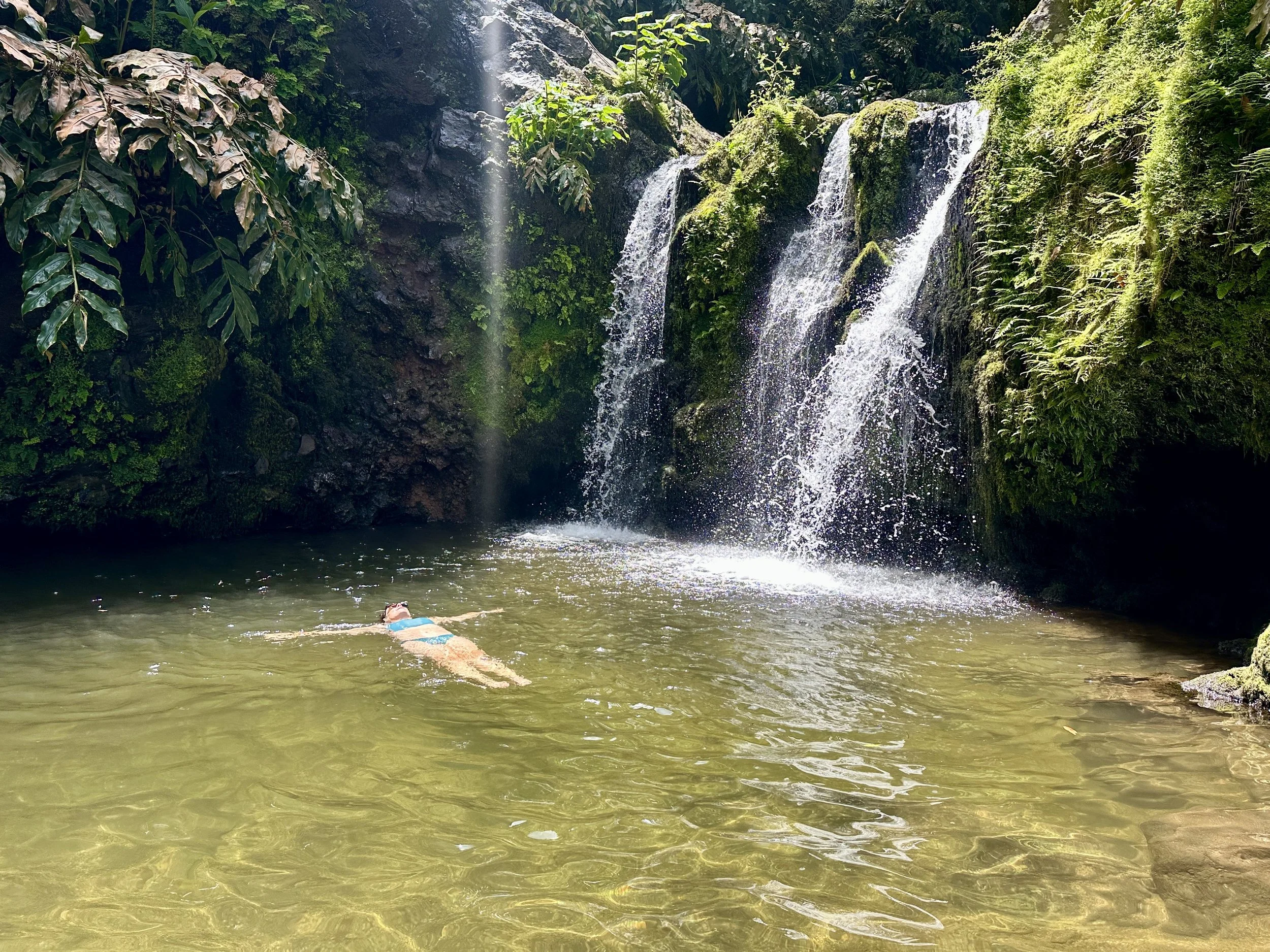
São Miguel in the Azores is the largest and most diverse of the archipelago’s nine islands. The island combines volcanic geology with a wet, ocean climate.
Rising from the meeting of three tectonic plates, the Azores are a living crossroads of fire and sea—nine green volcanoes adrift in the Atlantic. The largest island, São Miguel, combines European sophistication with raw, elemental beauty. For travelers seeking adventure—mountain biking crater rims, diving underwater lava flows, surfing frothy swells, or soaking in seaside hot springs—São Miguel is a tough travel destination to beat.
Unlike many island destinations, São Miguel remains refreshingly authentic. Its small towns still orbit around fishing docks and cafés instead of cruise ports. The locals greet you with understated warmth, and the entire island hums with geothermal energy—literally. Steam vents rise from cracks in the earth, and the scent of mineral springs drifts through valleys.
So let’s dive in and discover why São Miguel may deserve a spot on your travel bucket list.
What makes the Azores unique?
The Azores archipelago, a chain of nine volcanic islands belonging to Portugal, lies roughly 900 miles west of Lisbon. The islands are part of the Mid-Atlantic Ridge, where three tectonic plates converge, giving rise to a landscape of dramatic cliffs, turquoise crater lakes, and lush pastures. São Miguel—the “Green Island”—is both the most populous and the most diverse, combining most of the Azores’ best qualities in one island destination.
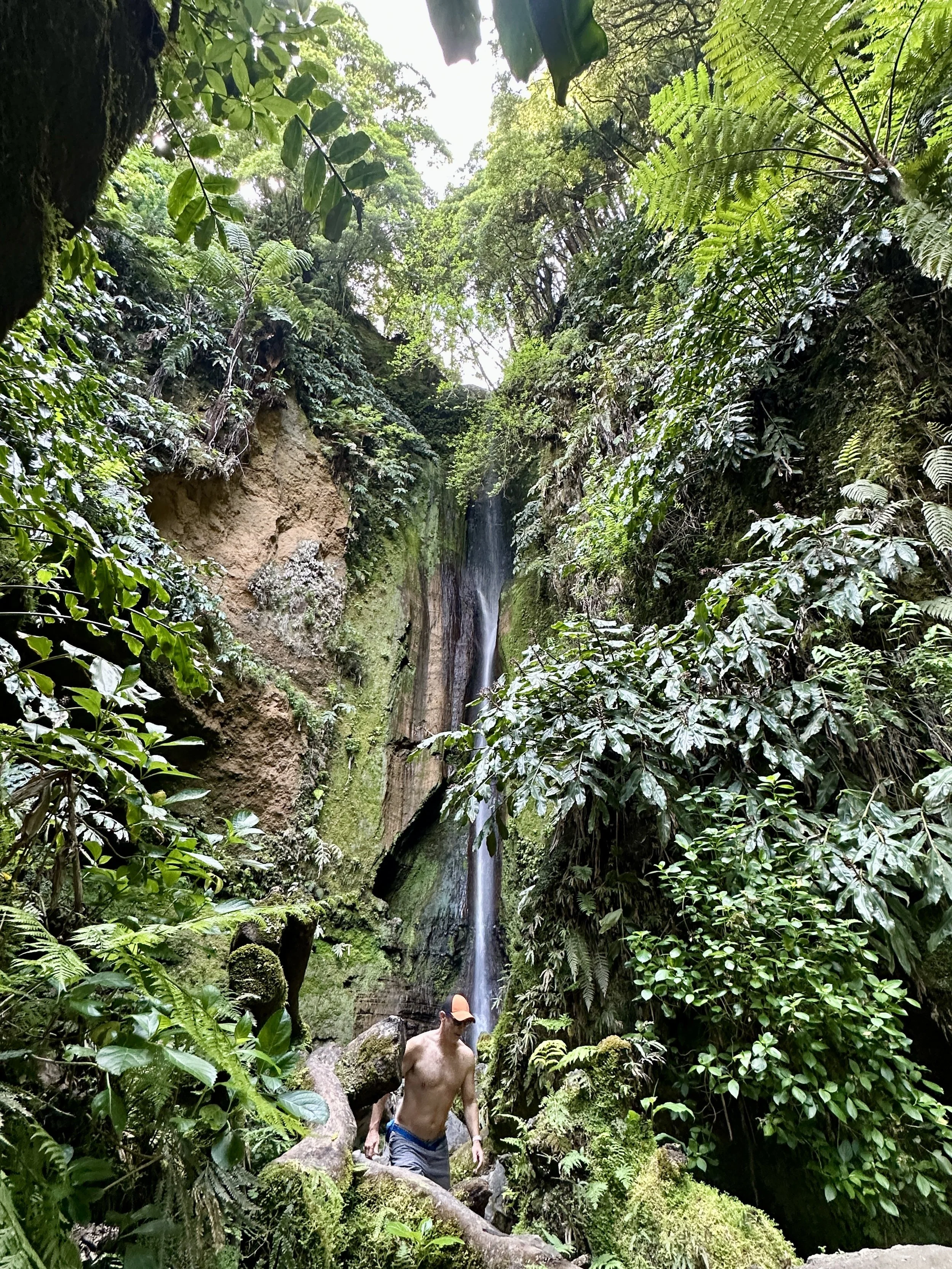
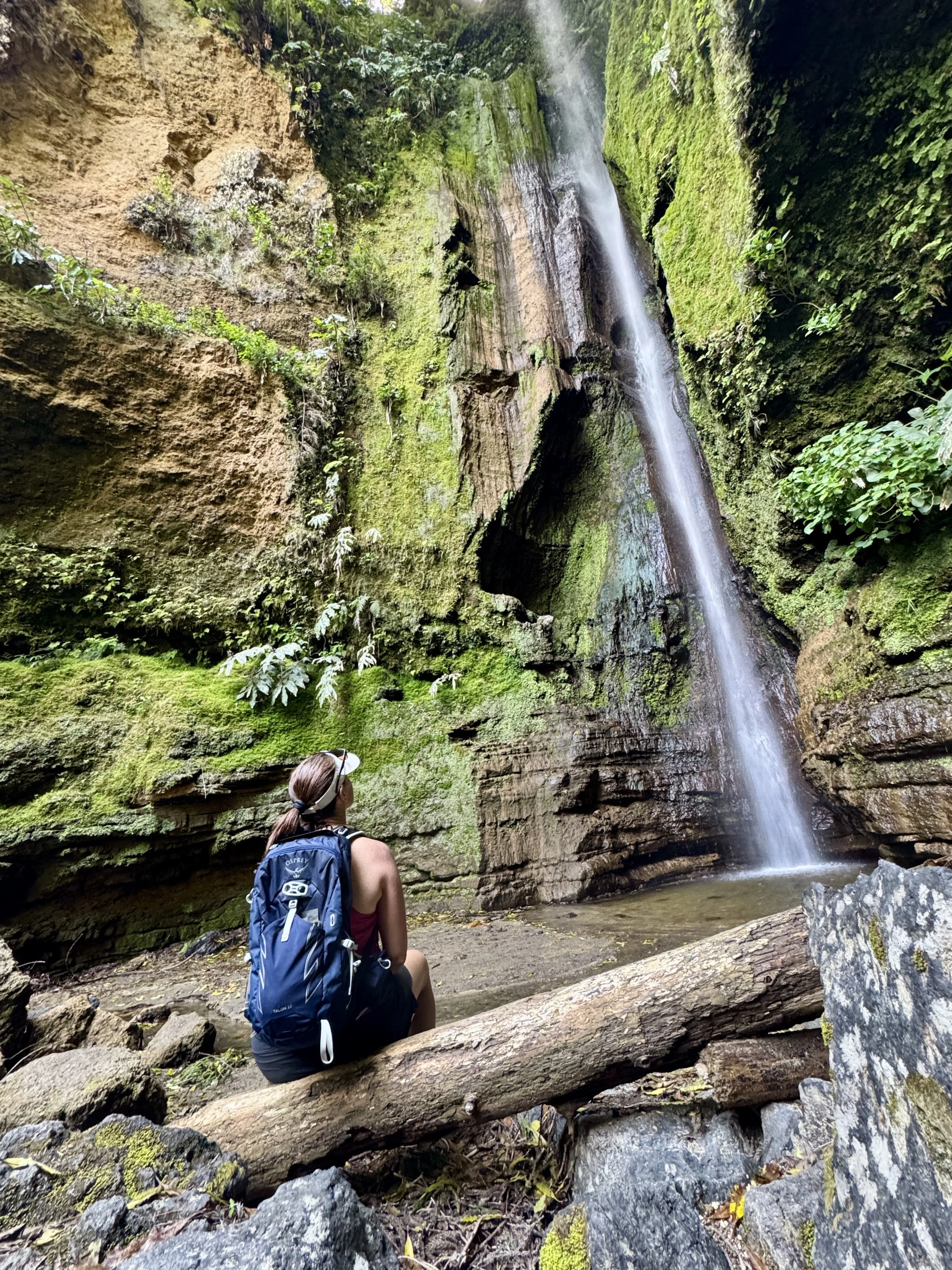
Nature is the main event here. Towering hydrangeas line roads in purple and blue. Cows graze above surf-crashed cliffs. Cloud-wrapped peaks open suddenly to reveal lagoons that mirror the sky. One minute you’re walking through subtropical forest; the next, you’re standing in a cool mist.
“It’s like Hawaii and Scotland had a baby,” joked a family from Boston who we met at the beach one afternoon. And in many ways, that’s pretty accurate.
Despite its isolation, São Miguel is also surprisingly accessible. Direct flights connect from Newark, Boston, New York, Toronto, and major European hubs. The time zone splits the difference between America and Europe, making jet lag negligible for people traveling from the east coast of the U.S.
Culture, currency, and safety
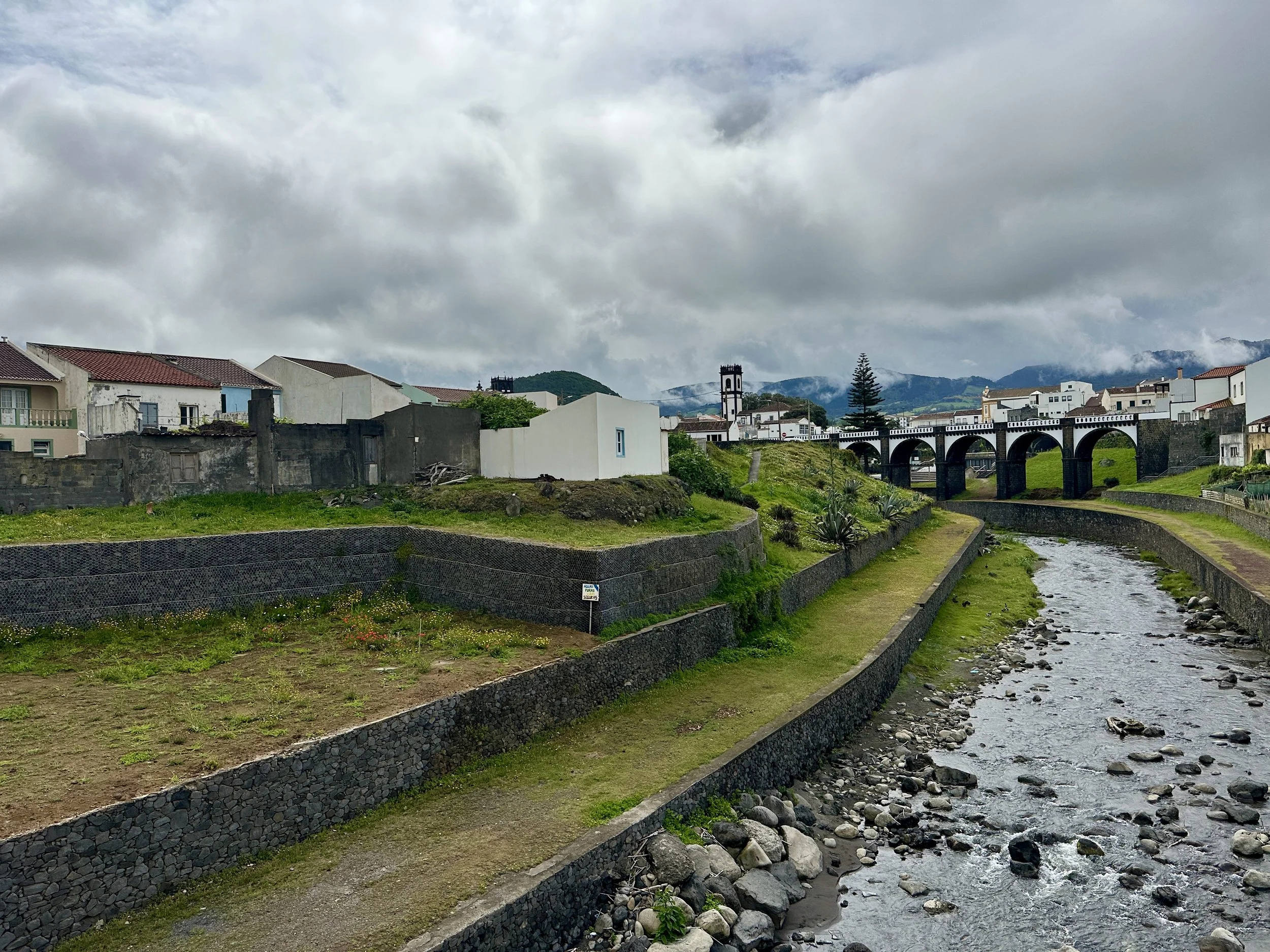
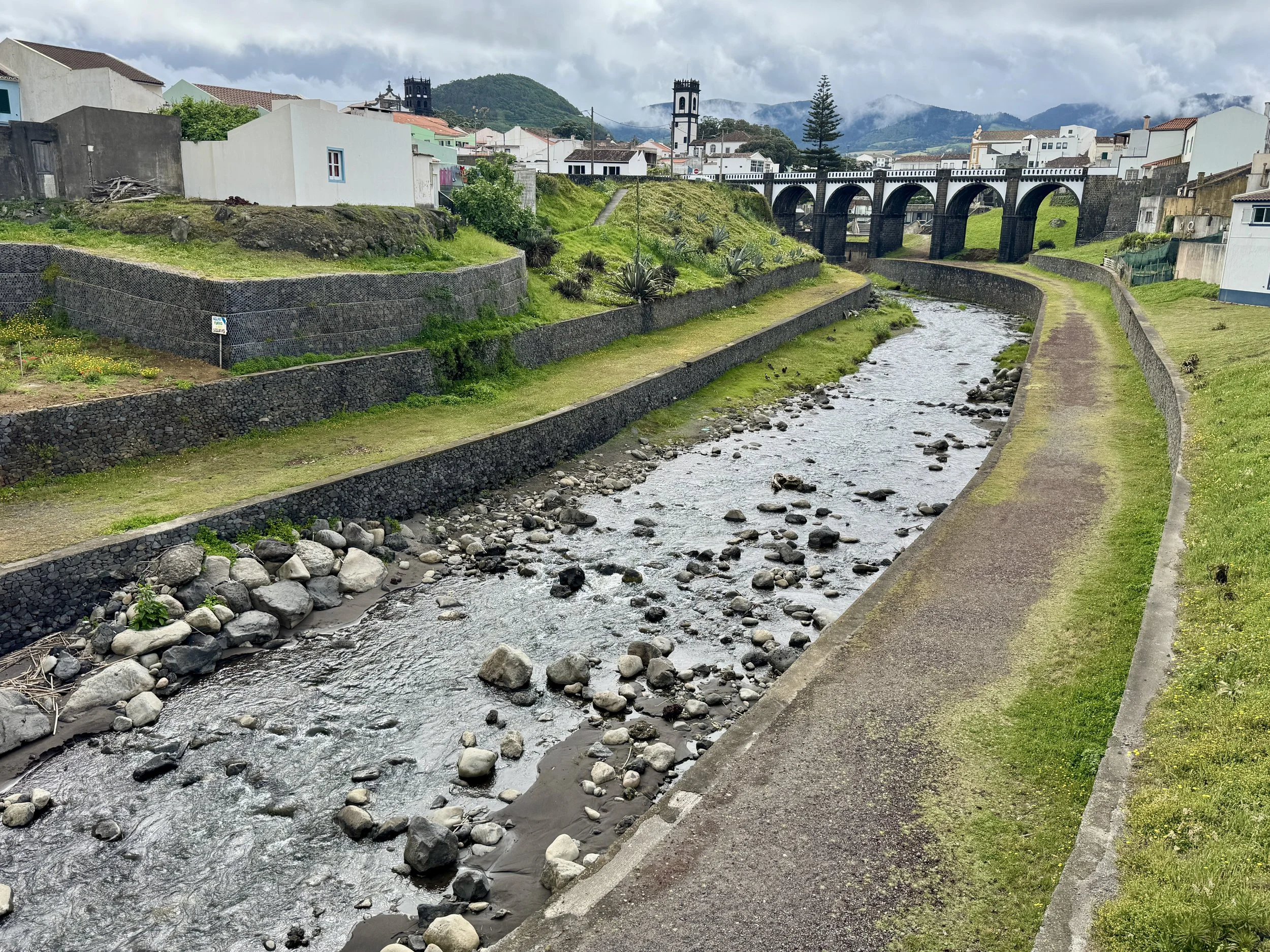
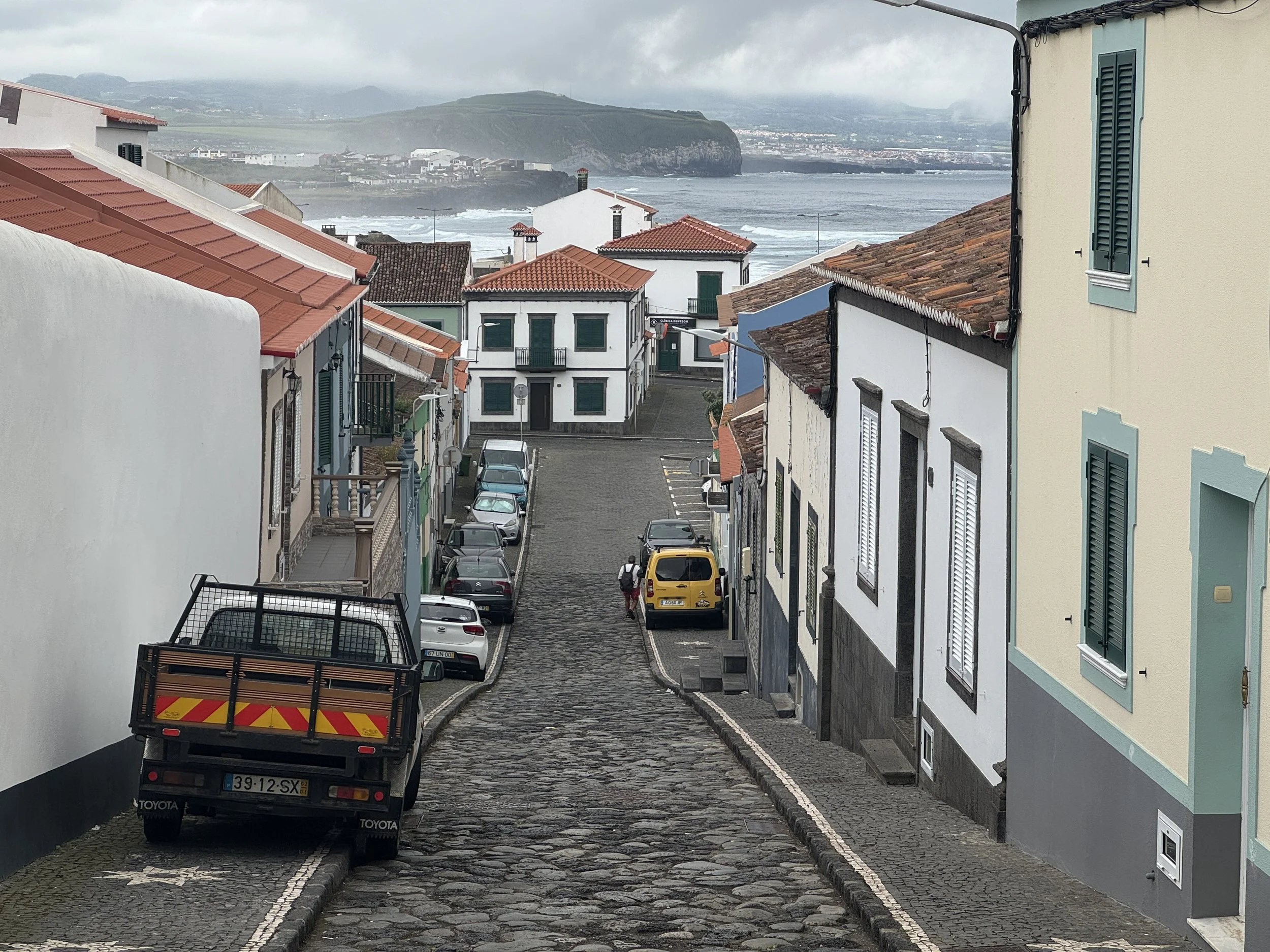
Ribeira Grande, on São Miguel’s north coast.
The Azores are part of Portugal, so the euro (€) is the local currency. Prices are generally lower than mainland Europe’s, especially outside Ponta Delgada, the islands’ largest city and economic hub. Credit cards are widely accepted, but it’s always smart to carry some cash for cafés and small mountain or coastal shops.
Portuguese is the official language, but English is common in tourist areas. While it’s not as common in rural areas, you can get by with a few appreciated basics—bom dia (good morning), obrigado/obrigada (thank you male/female), boa tarde (good afternoon).
The islands are also known for being extremely safe. Locals are said to leave their cars unlocked in small towns. The greatest hazards are probably natural: slippery trails and the ever-moody Atlantic weather that can turn a calm morning into a fog-smothered afternoon.
Perhaps most of all where safety is concerned, the extremely narrow (often one lane) roads that weave through towns and wind around the island can be scary—especially during peak travel season when tour busses take up a disproportionate share of the available space.
Our São Miguel Itinerary
Our late June journey around São Miguel blended cultural discovery and quiet contemplation with hiking, biking, and SCUBA diving. My wife and I traveled to the Azores to celebrate our 10-year wedding anniversary. While we enjoyed a few luxuries, we didn’t focus too much on expensive dinners or posh accommodations. We divided our time among four primary regions, each with its own rhythm and landscape:
Furnas Valley: several days hiking, mountain biking, and taking in local culture among fumaroles and lush forest.
Ponta Delgada: staying aboard a boat in the marina, scuba diving volcanic walls, and exploring the capital’s cafés and cobblestone streets.
Sete Cidades: hiking and biking inside the island’s most famous caldera, and relaxing in nearby coastal hot springs.
Ribeira Grande: taking surf lessons on the north shore and exploring this smaller city’s quiet seaside charms.
We rented a small car for the week and drove from town to town every two or three days. Once checked into our accommodation, we walked, which was a great way to experience the local culture.
The living geology of the Azores
São Miguel is a geological wonder sculpted by millions of years of volcanic activity. The island’s last major eruption in the 17th century formed the Furnas Valley—where hot springs still bubble from the earth and geysers vent plumes of steam.
This part of the Atlantic sits atop one of the world’s most unusual tectonic intersections, where three plates meet. The Azores aren’t the most active volcanic region on Earth, but their landscapes make the planet’s inner forces uniquely visible.
This dynamic geology defines São Miguel’s character. Volcanic soil rich with minerals gives the island its luminous green hills, while fumaroles and hot springs breathe heat into the landscape.
Craters have become lakes of striking calm and color, and the entire island feels suspended between creation and repose—ancient but in constant motion.
Furnas: Valley of steam and stillness
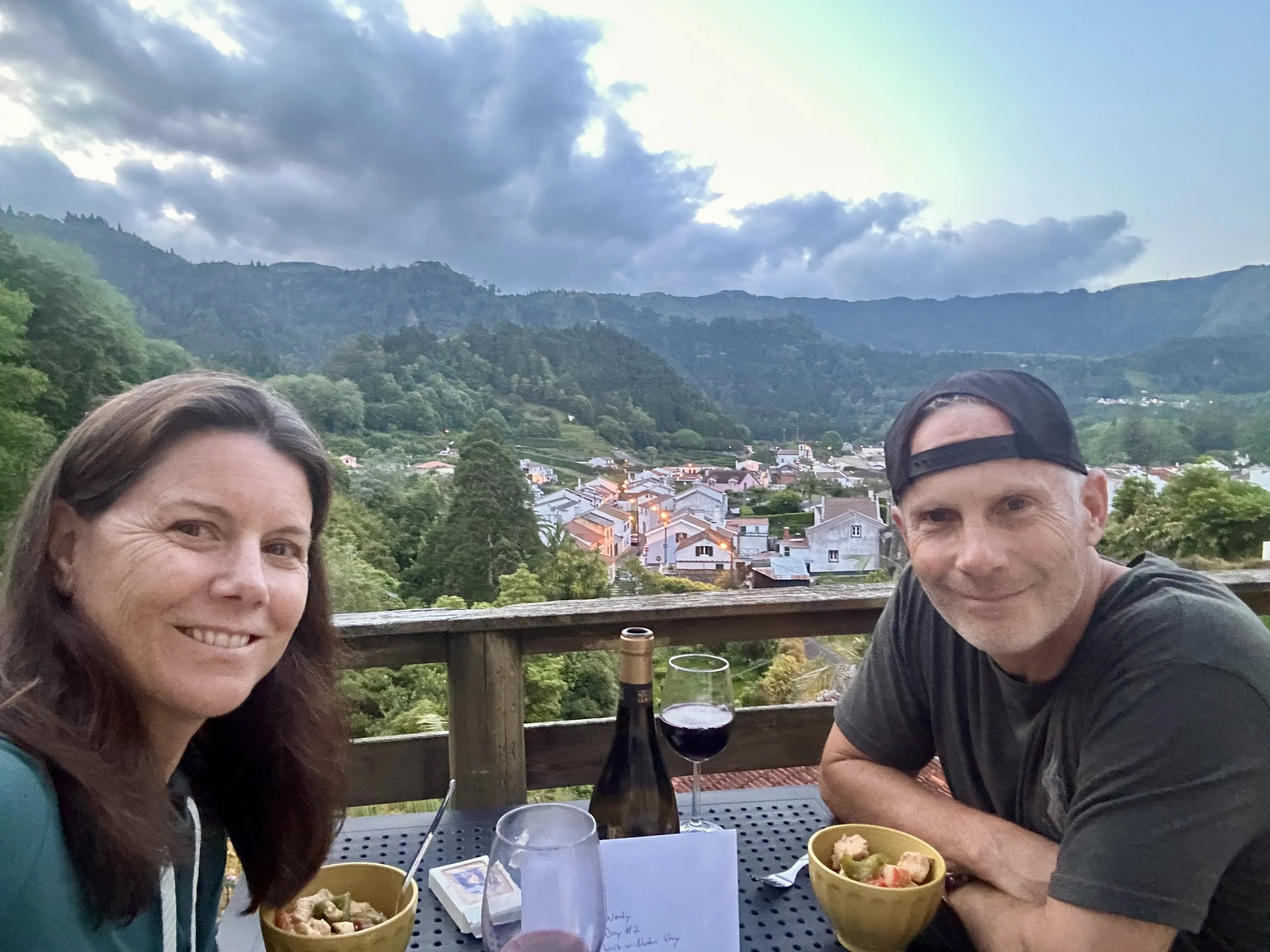
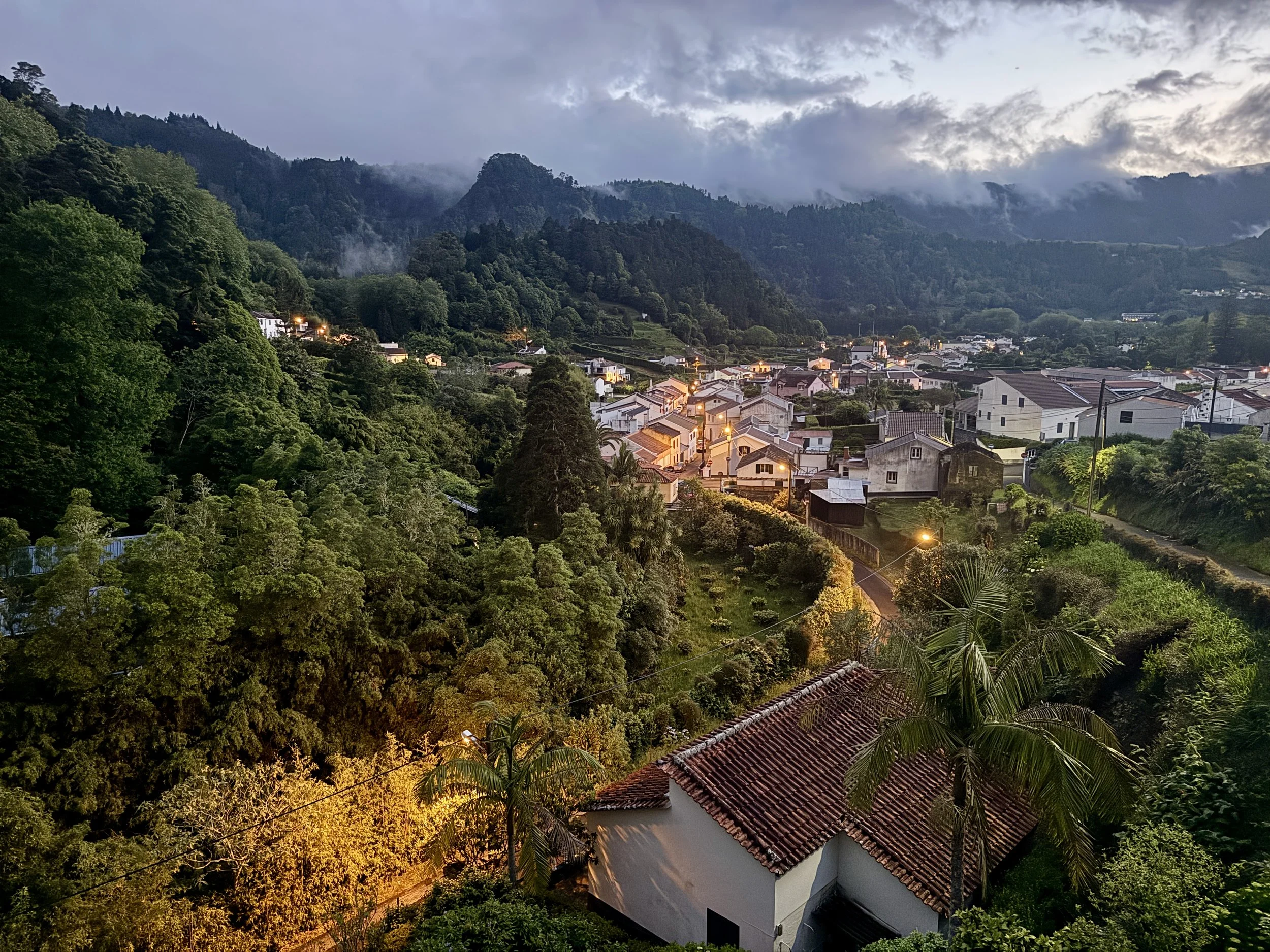
Our first three days on São Miguel were in Furnas, a peaceful valley full of rushing water and birdsong. Pictured: the view from our open bedroom window.
Our three-night stay in Furnas was one of the highlights of our trip. From our hillside Airbnb, mornings began with birdsong and soft bells from the village below with the scent of rain-spattered vegetation drifting through open windows.
Tucked into the eastern highlands of São Miguel, Furnas feels different from most of the island’s seaside towns. It’s an emerald valley bordered on all sides by forested ridges.
Furnas felt alive yet peaceful, a rare combination of vitality and calm. It’s the kind of place that lingers after you’ve left, reminding that even on a volcanic island, serenity can spring straight from the earth.
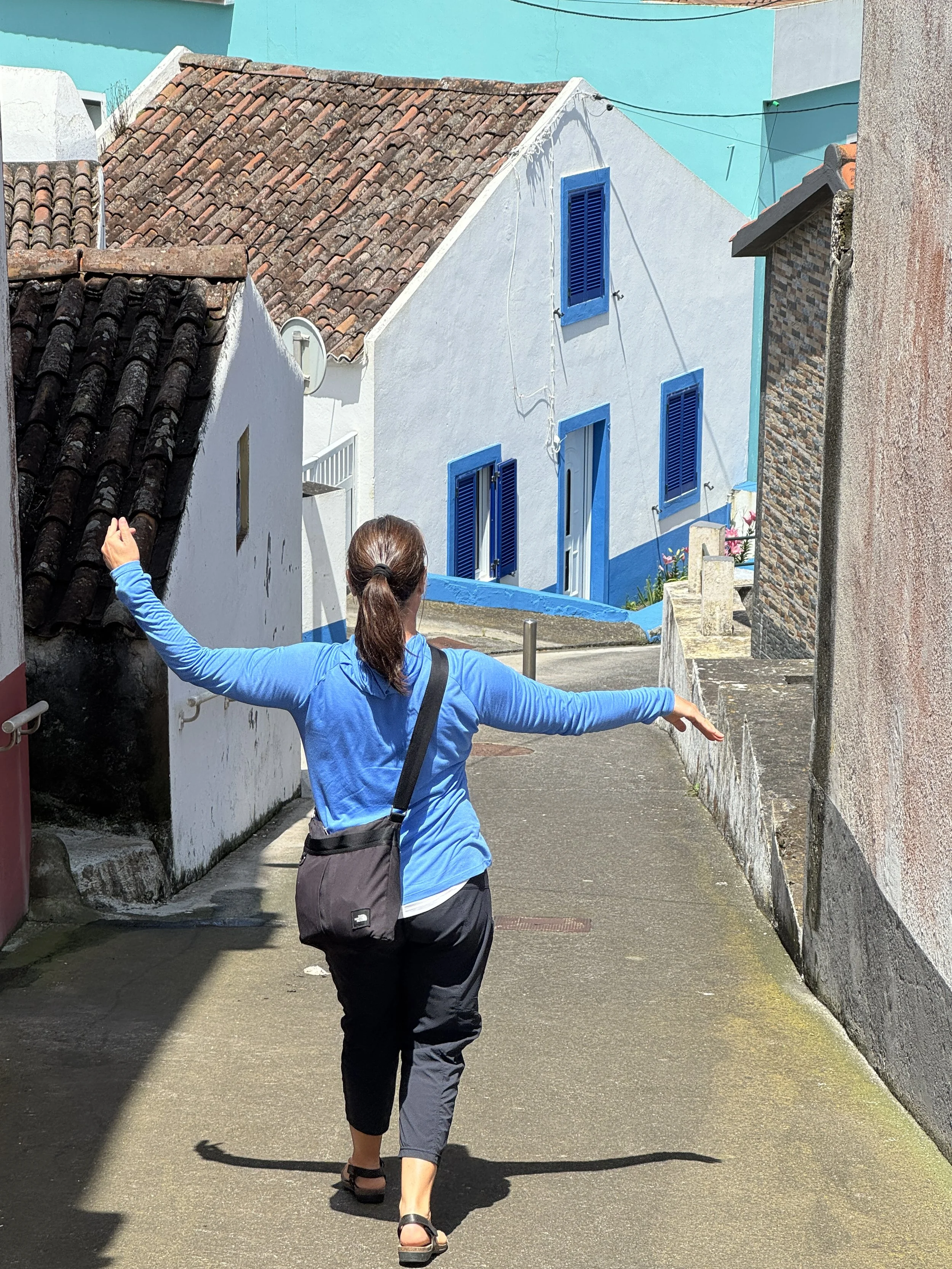
We were able to walk everywhere in Furnas. A winding lane led into town for groceries and meals. Furnas’s small center is strung with cafés, pastel-colored homes, and mineral fountains. Steam rises from fumaroles along the river, where bubbling mud pots hiss beside picnic tables. The mix of domestic life and volcanic energy is kind of surreal. It’s a place where you can order a European espresso a few yards from a geyser.
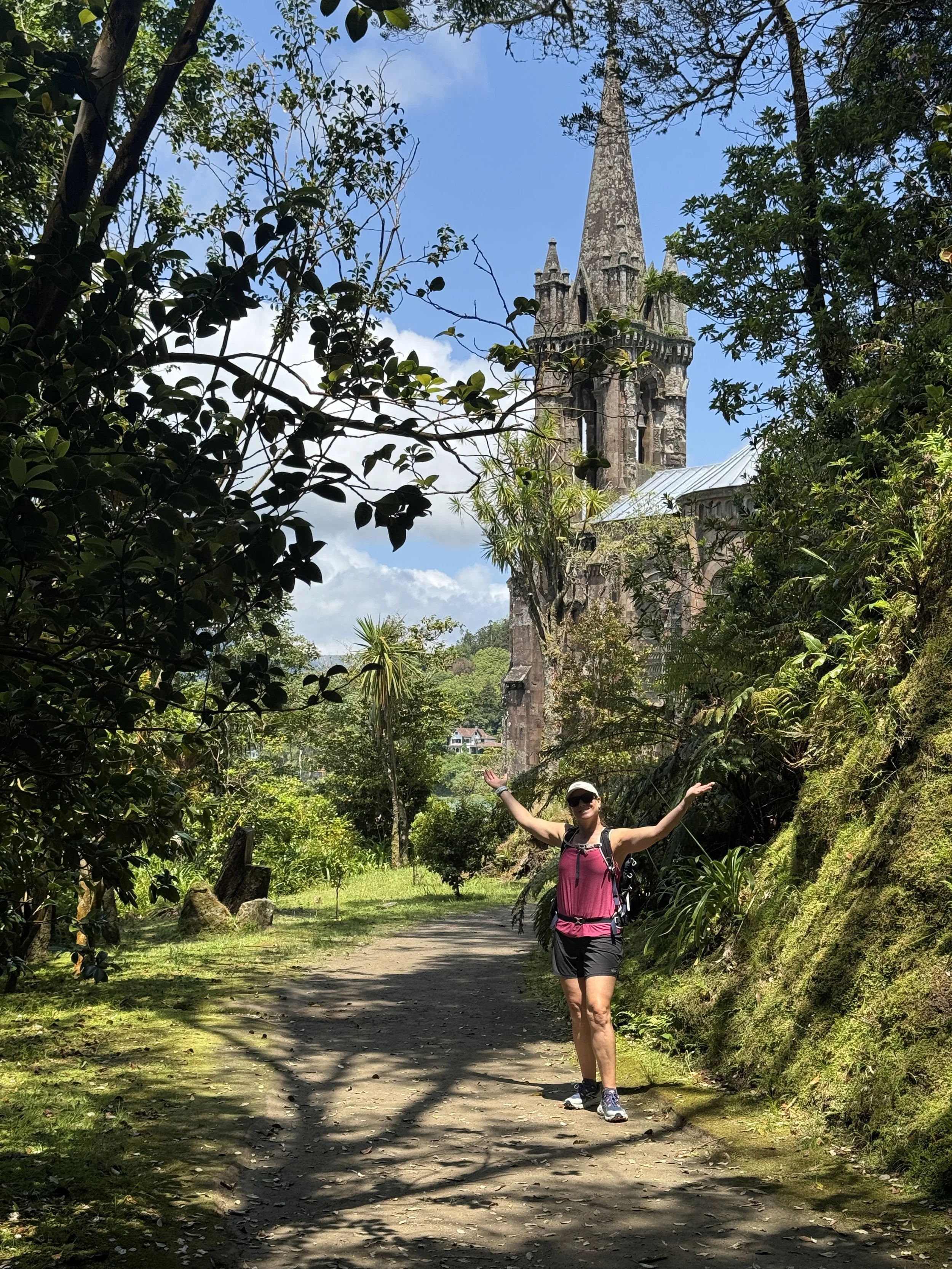
One day after breakfast we hiked straight from our Airbnb to Lagoa das Furnas, circumnavigating the lake in about 7.6 miles of walking a shaded trail that circles the water and winds through laurel forests and thickets of hydrangeas. On the south shore, the Church of Nossa Senhora das Vitórias stands in solitude, a 19th-century Gothic monument built by a grieving widower and now carpeted in moss.
Evenings on our porch were as memorable as the hikes and explorations of town. The air cooled, mist gathered on the hills, and the valley filled with the sound of rushing water and chatter of unseen birds settling for night.
Ponta Delgada: Exploring the capital city of São Miguel
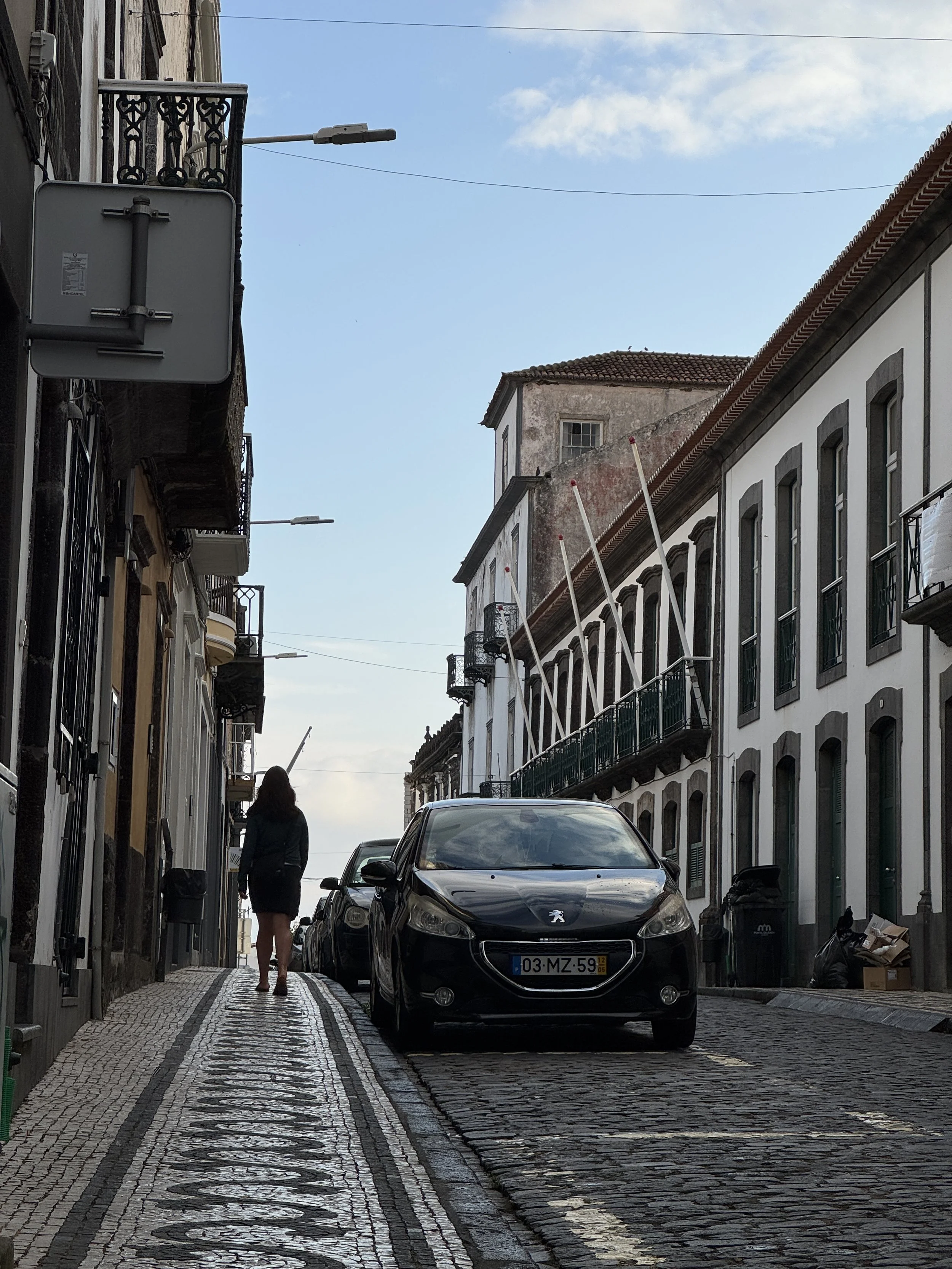
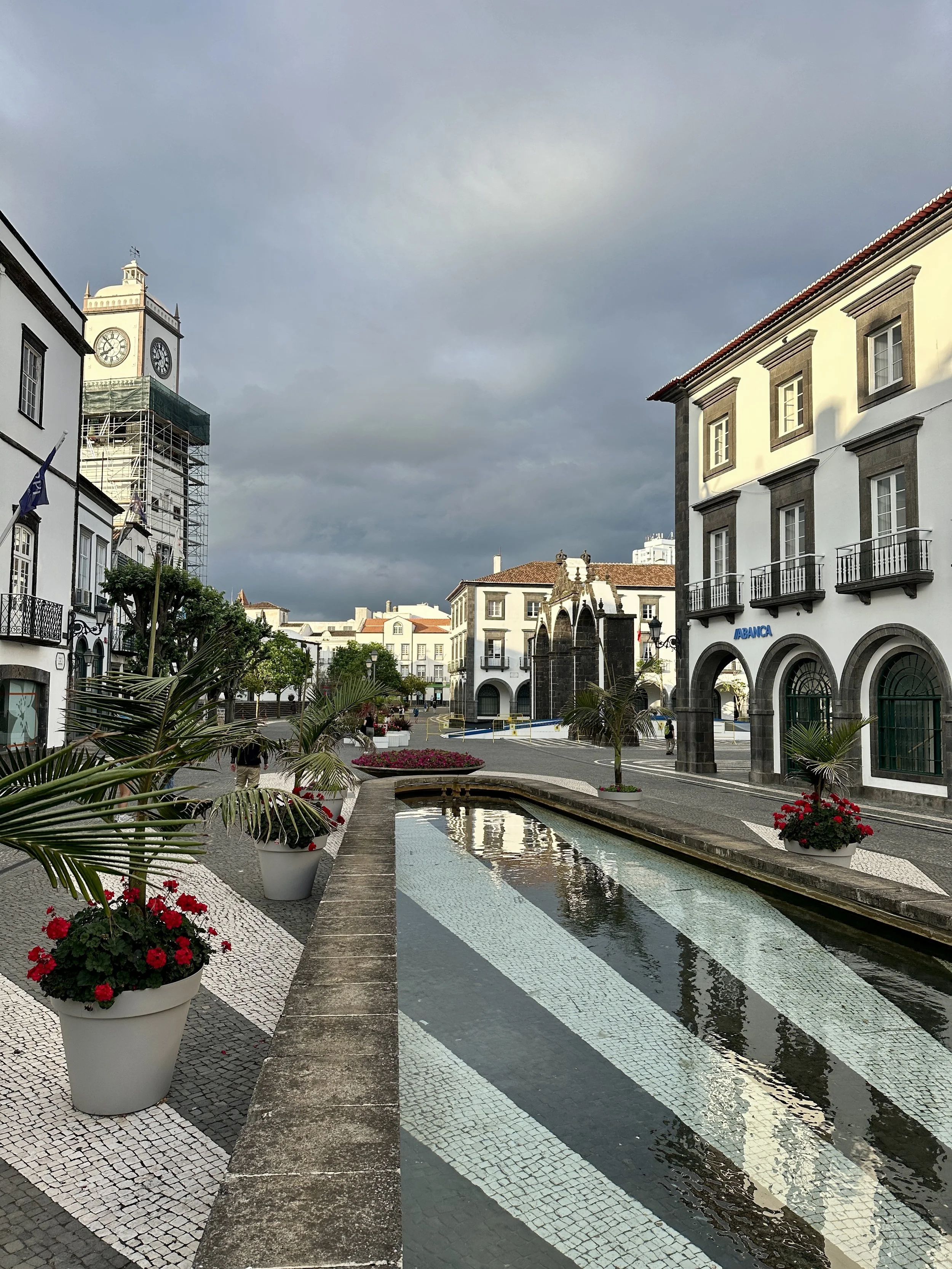
Ponta Delgada has a distinctly urban flare compared with the rest of Sau Miguel. But it’s still a slow-paced place.
Ponta Delgada, the island’s capital, feels both European and tropical—a city of whitewashed walls trimmed in volcanic basalt, narrow lanes, and public squares framed by palms. With roughly 70,000 residents, it’s lively but not hectic.
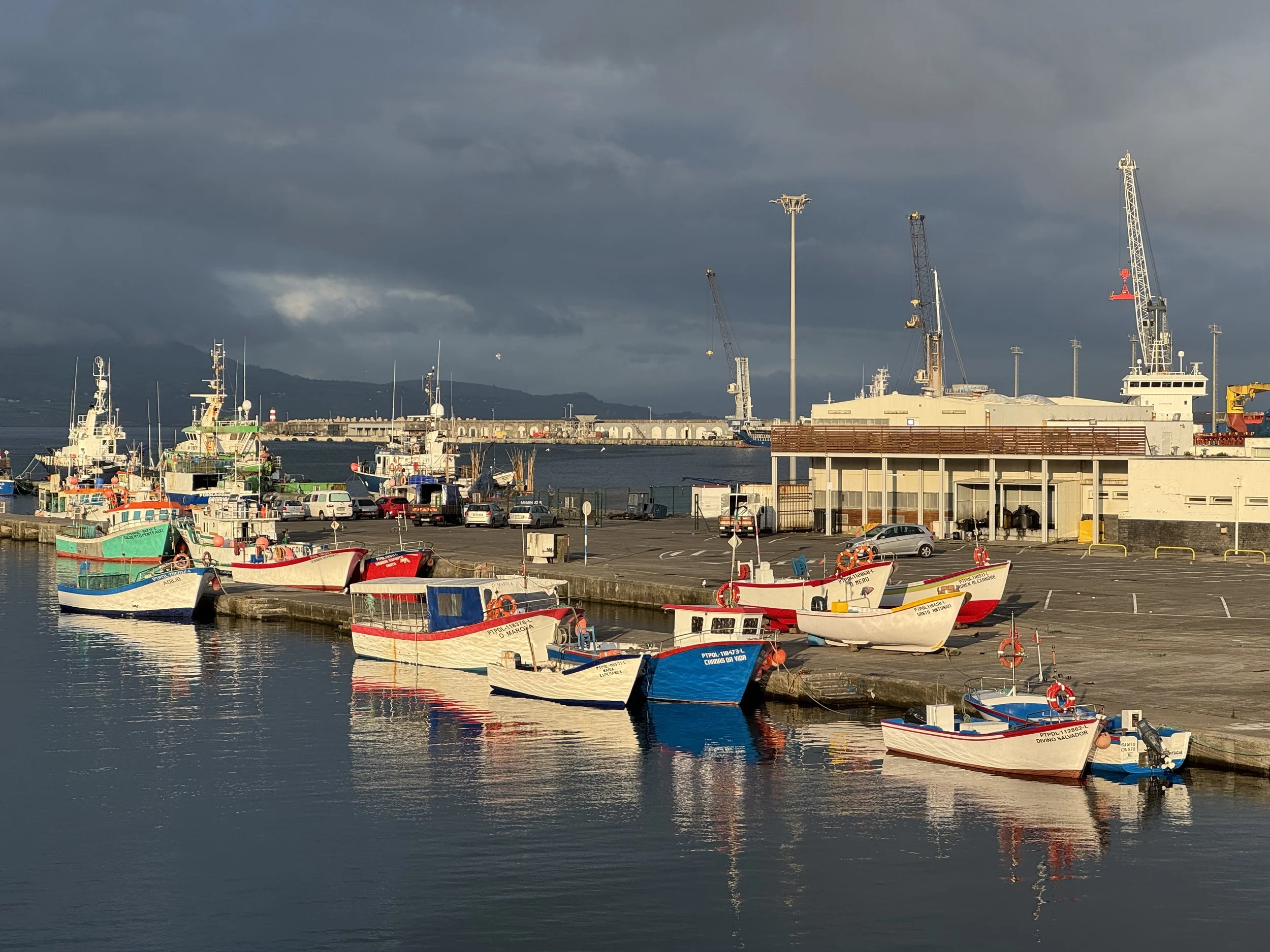
The harbor front promenade is great for an evening stroll, and the Portas da Cidade (“City Gates”) mark the historic center where 18th-century architecture meets sidewalk cafés.
We found one of our favorite meals at A Tasca, a bustling tavern beloved by locals and visitors alike. Wooden tables crowd beneath hanging nets and wine bottles. We sat with a woman traveling alone from Arkansas and a German Couple on holiday. The atmosphere was informal and warm—exactly the kind of place that convinces you to order another glass of good wine.
Elsewhere in town, the Mercado da Graça offers local produce, cheeses, and pineapple grown in the island’s greenhouses. Museums and churches tell the story of Azorean settlement and whaling history, but the real joy lies in wandering—turning down an alley to find a mural, a hidden courtyard, or a bakery scenting the street with sweet bread.
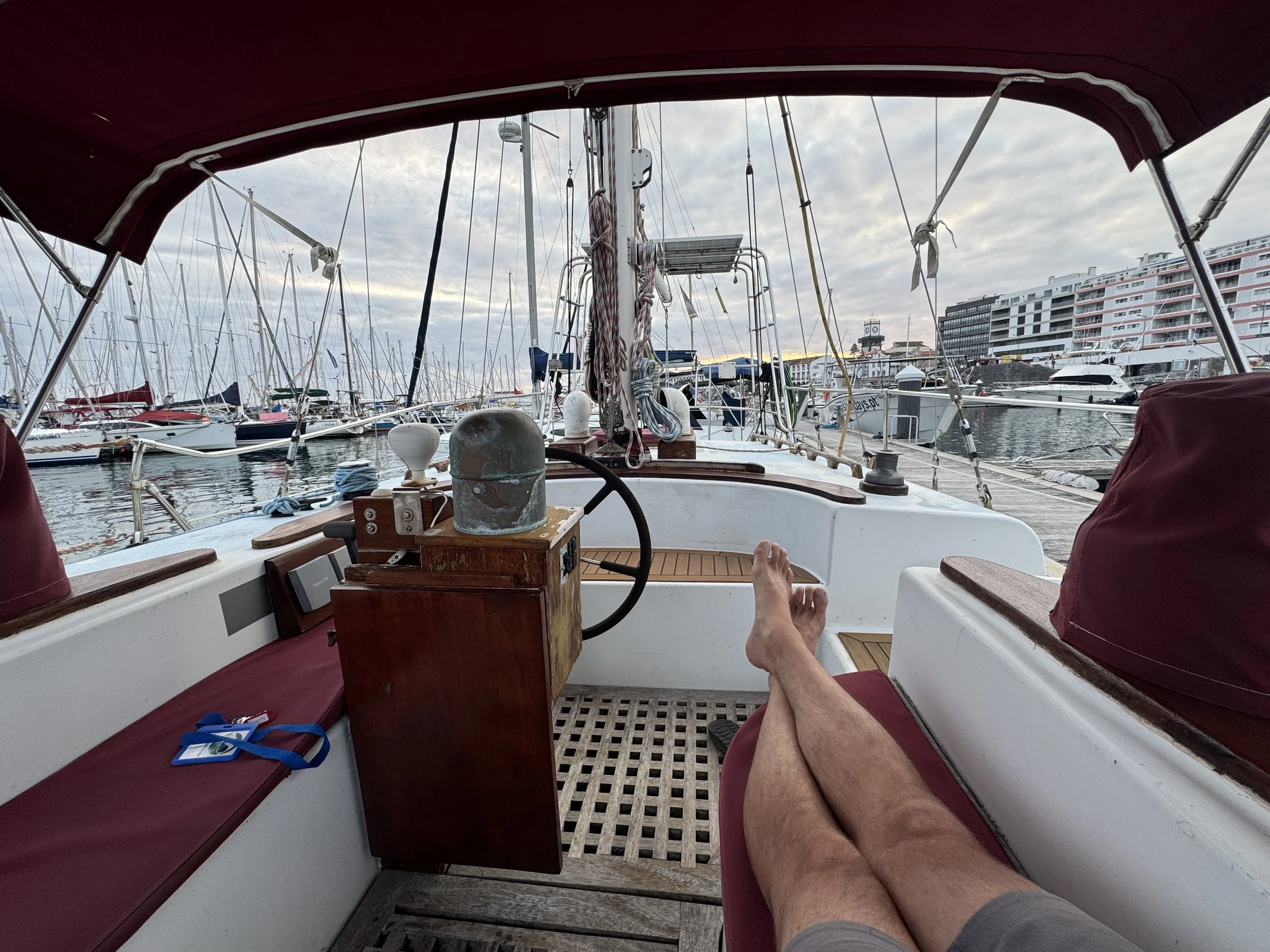
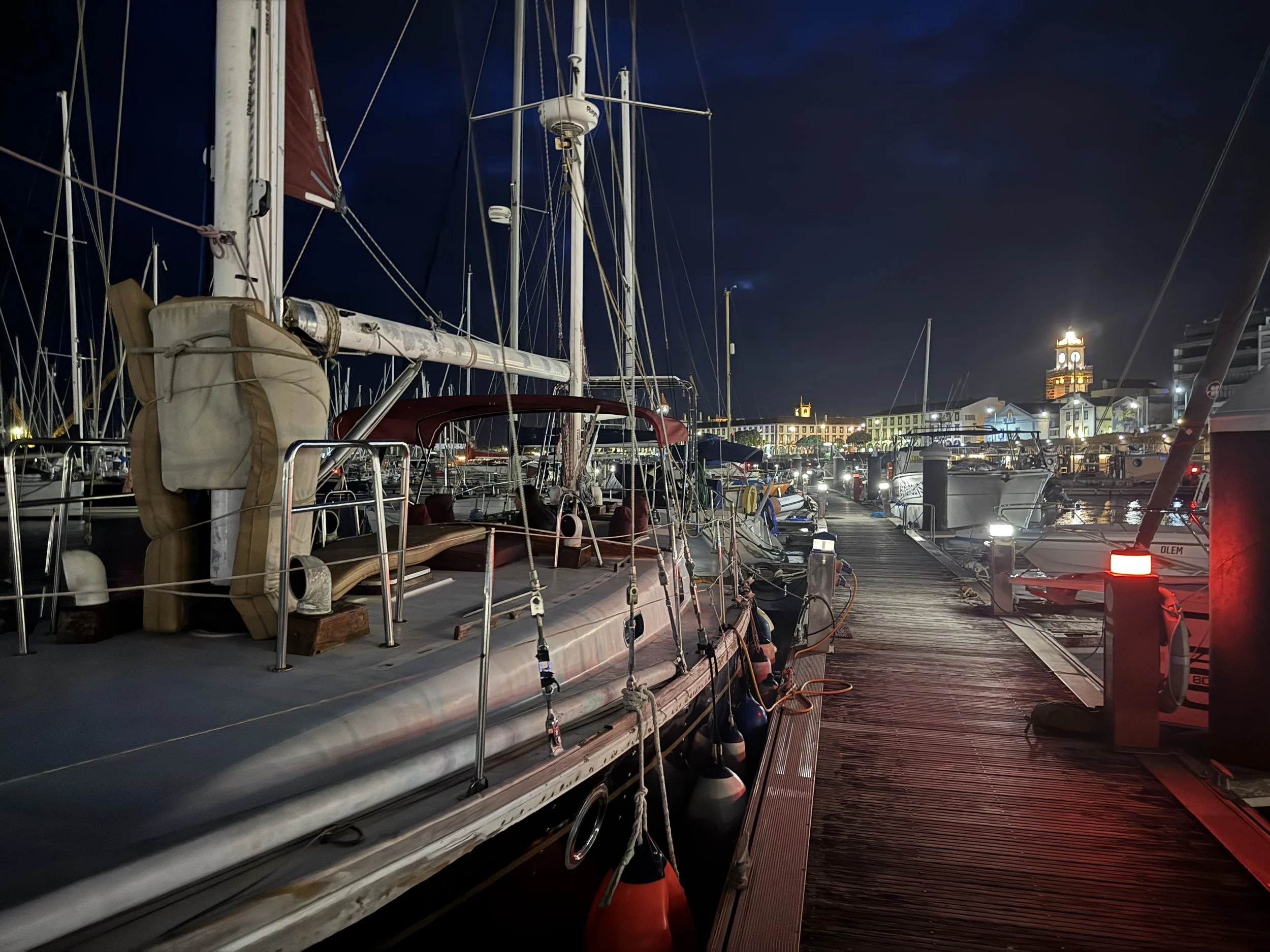
We spent our nights in the marina of Ponta Delgada aboard a decommissioned sailboat—an experience that felt more like a floating boutique lodge than standard accommodation. From our cabin, framed by portholes, we watched the lights of the harbour shimmer on the Atlantic while a gentle rocking lullabyed us to sleep.
It was also walking distance from the SCUBA company we’d booked. That means we didn’t have to drive for the three days we spent there. (More on diving the Azores below.)
Sete Cidades and Mosteiros
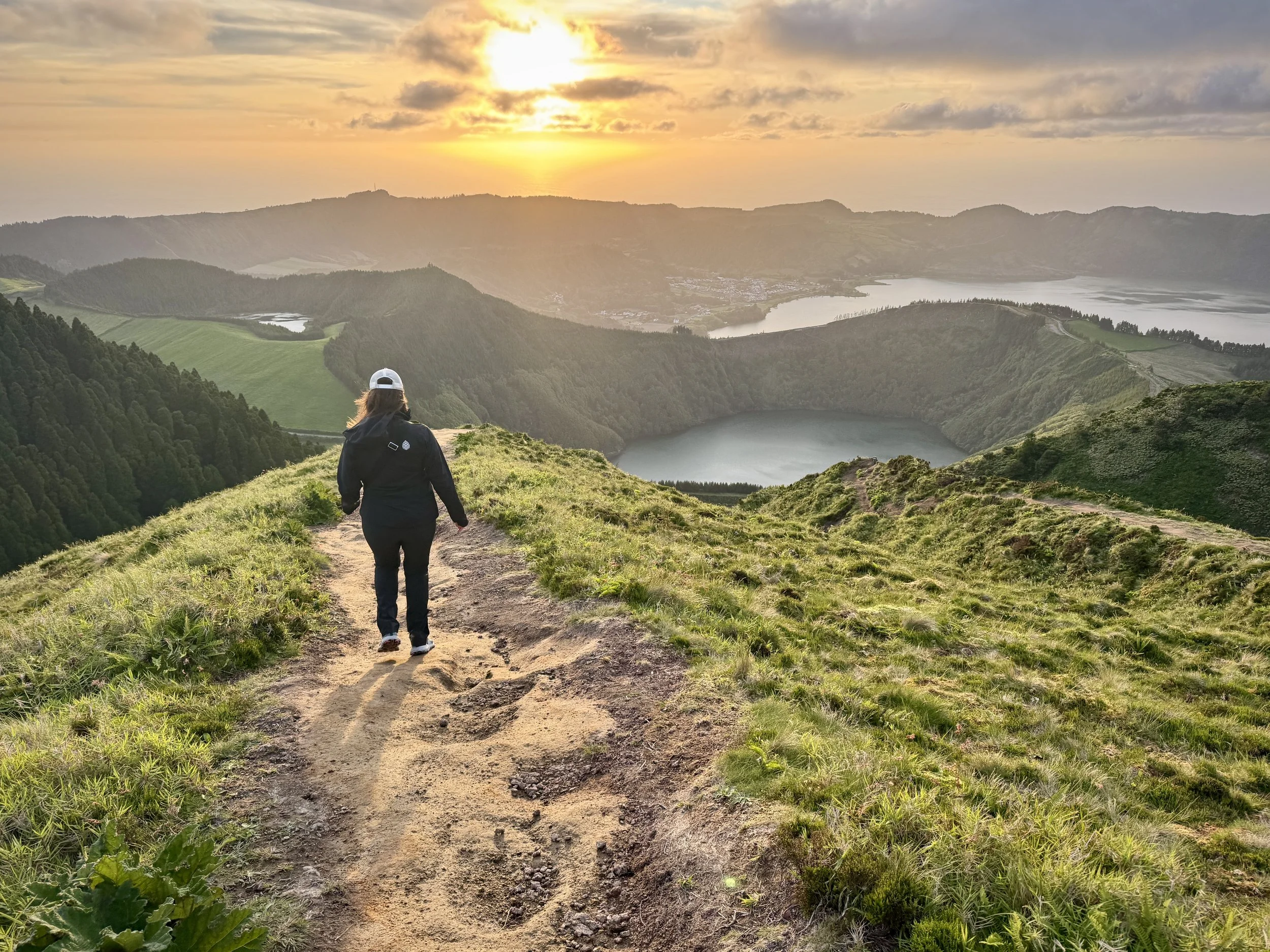
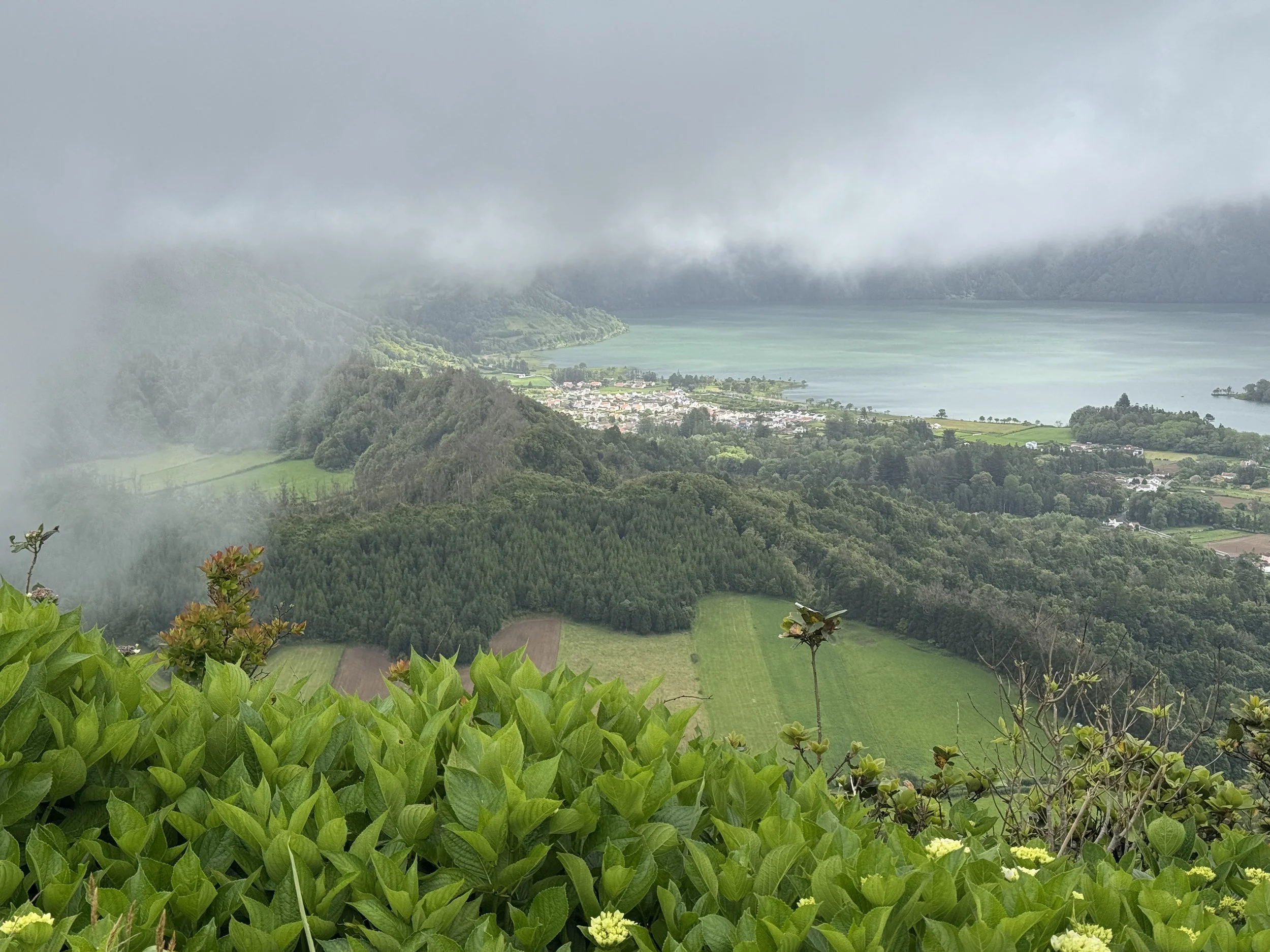
Sete Cidades from the crater rim.
The most iconic volcanic site on São Miguel is a two-mile-wide caldera called Sete Cidades. This steep-walled, misty-green crater holds two adjoining lakes—one blue, one green—linked by a narrow stone bridge.
Legend tells of a shepherd and a princess whose tears gave the waters their colors, but the science is just as poetic: sunlight and surrounding vegetation reflect differently across the twin basins, tinting one turquoise and the other jade.
Sete Cidades is also the name of the small lakeside village tucked at the crater’s edge, a quiet, picturesque community of whitewashed houses and narrow cobblestone lanes. We spent a few days wandering its streets, walking the shoreline, and biking and hiking the trails that climbed up the crater wall. (More on mountain biking below.)
The rhythm of life in Sete Cidades feels unhurried—locals chatting at the local cafe, a dog sleeping in the road, birds singing throughout the day, the faint scent of woodsmoke curling from chimneys.
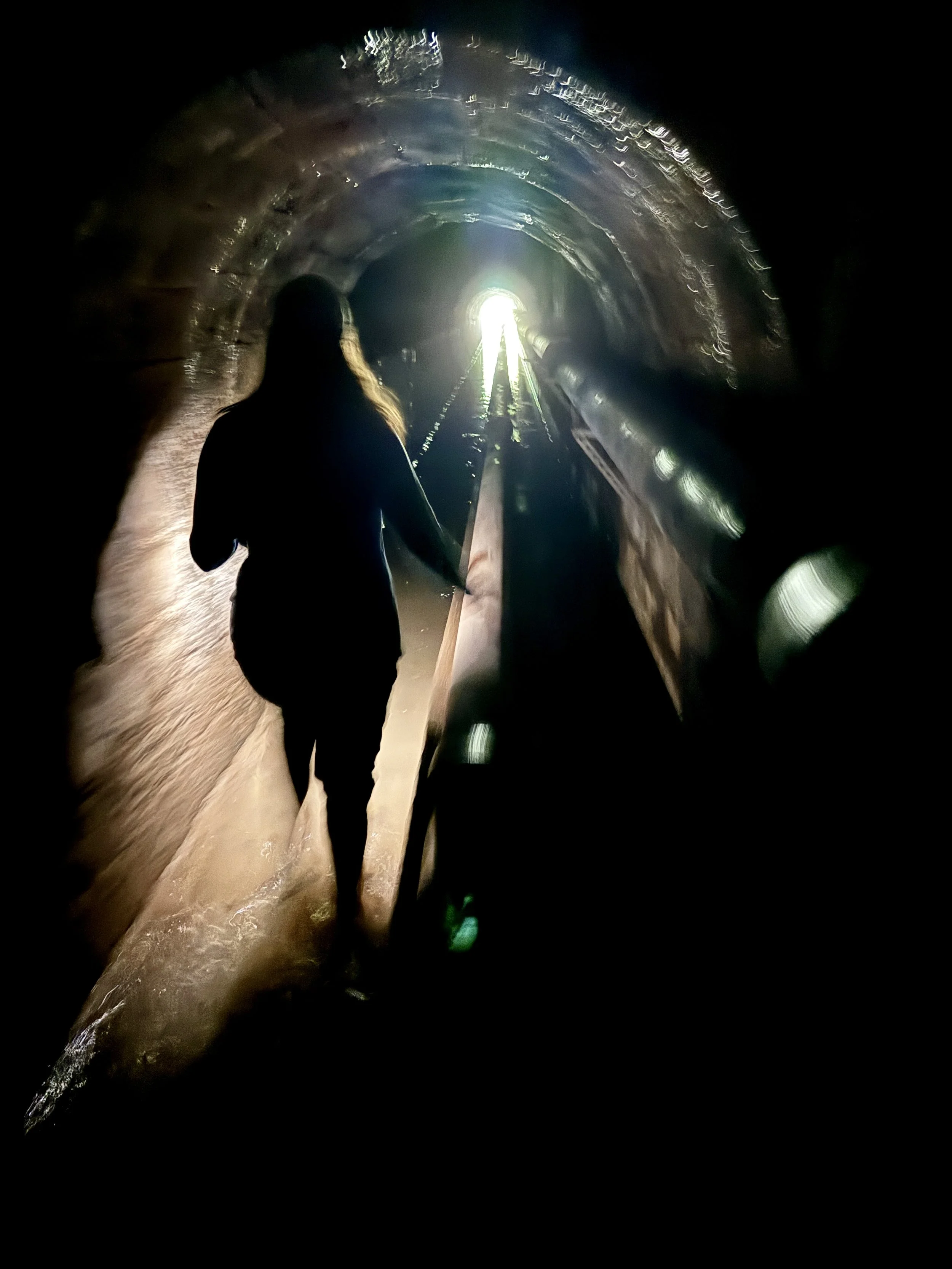
Just outside town, we found the man-made overflow tunnel that pierces the crater wall—a 1.2-kilometer passage dug in the 1930s to drain excess water from the lake. Today it doubles as a curious attraction, and we walked its full length, out and back, with the lights of our cellphones and conversation echoing off the damp stone walls. Emerging on the far side of the mountain felt like stepping through a portal—from the stillness of the caldera to sweeping coastal views and open Atlantic air.
Back in town, we stopped for tea and pastries at the Green Love Tea House, a cozy café perched above the lakes. Inside, the scent of freshly baked bread mixed with the earthy aroma of locally grown Gorreana tea, harvested on the island’s north slope. Sitting by the window with warm mugs and fog drifting past was one of those simple, timeless travel moments—part comfort, part wonder, and totally relaxing.
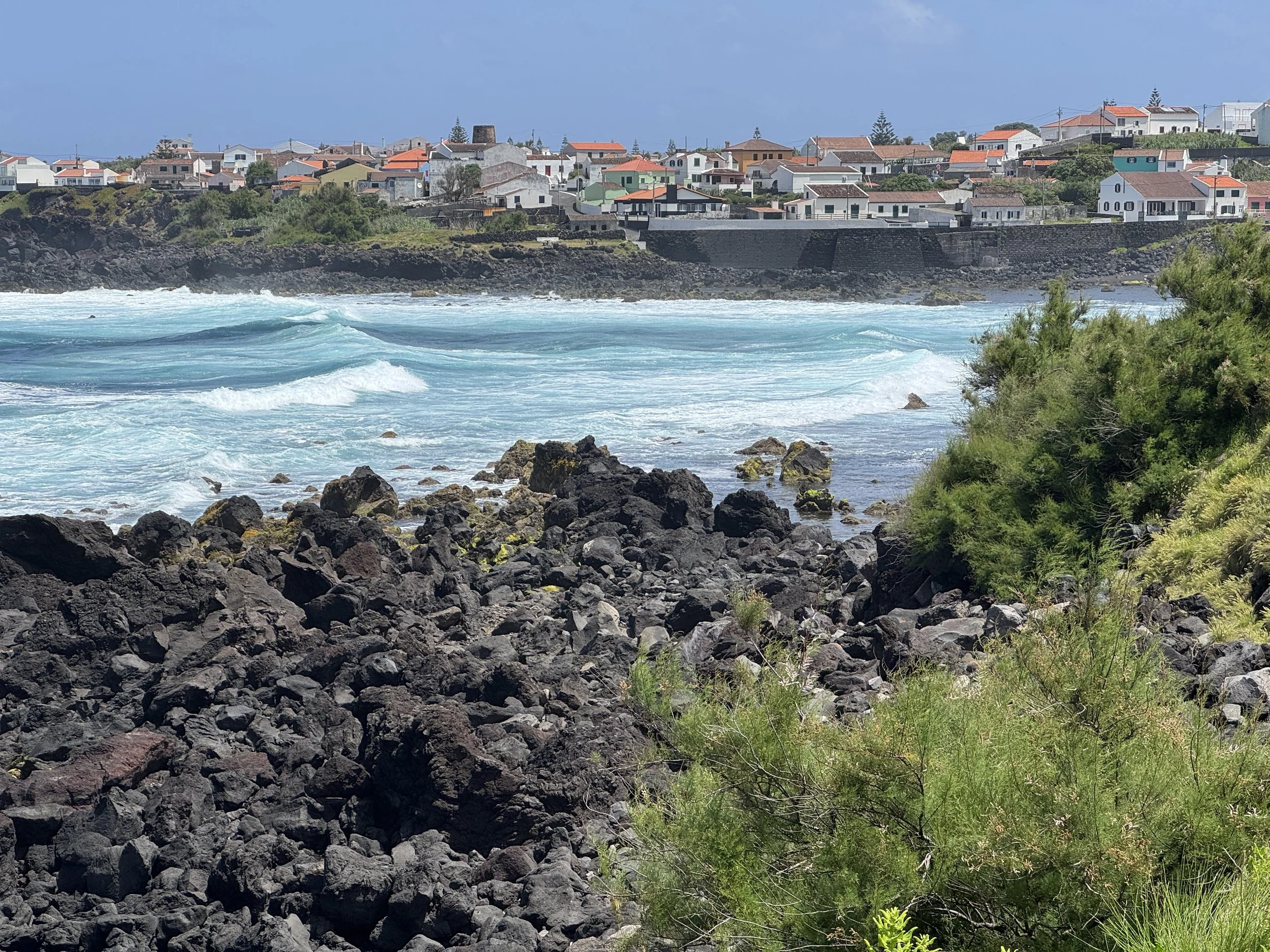
From Sete Cidades we also took an afternoon excursion west toward Mosteiros, a coastal village at the island’s edge where black volcanic cliffs meet a rough and restless sea. Offshore, sea stacks rise like sentinels from the surf, remnants of ancient eruptions now sculpted by waves.
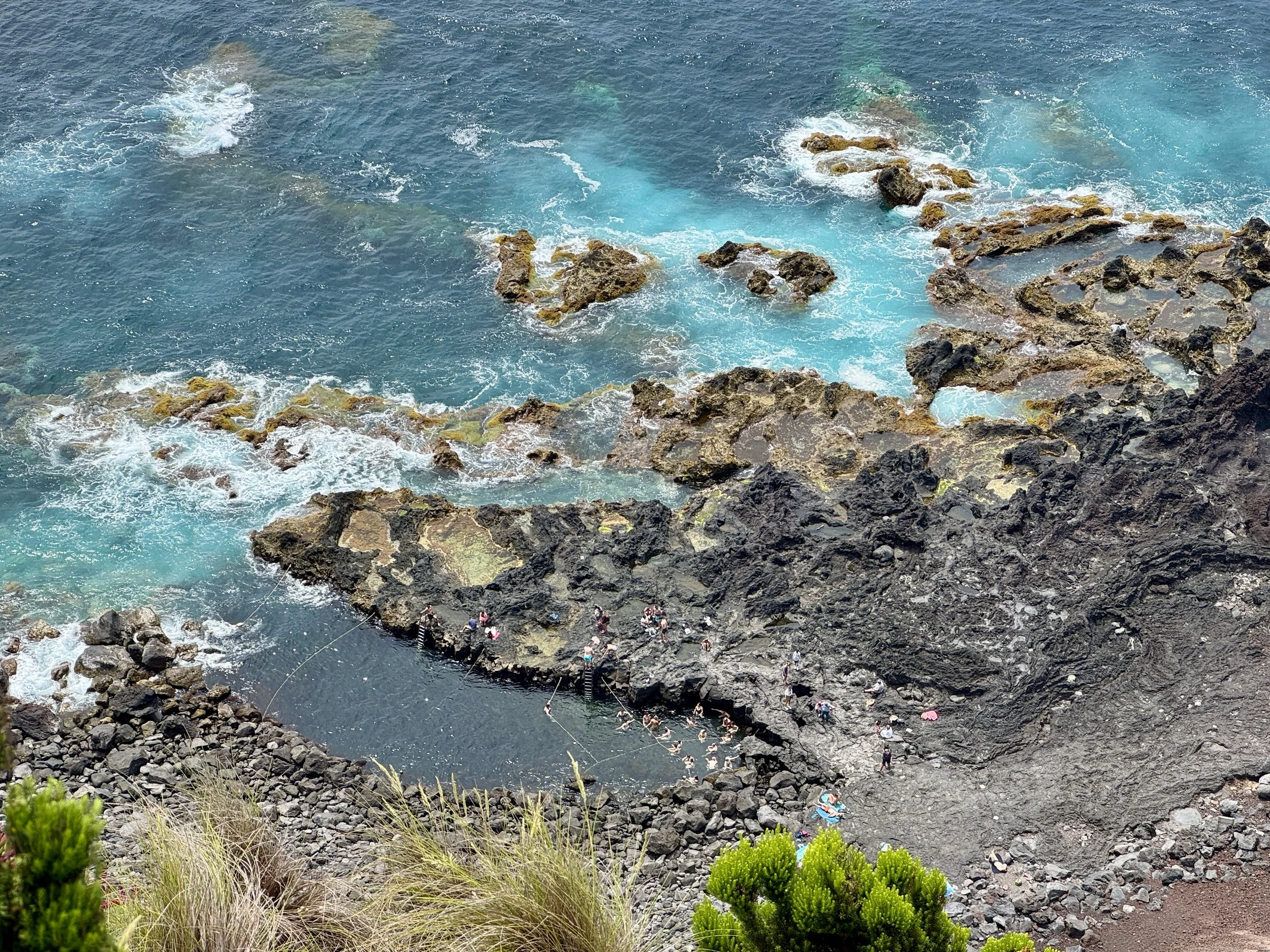
A few miles south lies Ponta da Ferraria, where a natural thermal spring flows into the ocean itself. We timed our visit for low tide and joined a couple dozen locals and tourists soaking in the rock-rimmed pool, waves rolling in alternately cool and hot as they mixed with the geothermal water.
Ribeira Grande: City of stone and surf
The easily walkable Ribeira Grande has understated charm.
Our last stop on São Miguel was Ribeira Grande, a coastal city on the island’s north shore where the sea meets volcanic stone. The town is smaller and quieter than Ponta Delgada but full of charm—arched bridges crossing the river for which it’s named, basalt churches framed by white stucco, and narrow streets lined with cafés and artisan shops.
We spent an afternoon wandering the old city center, stopping for sandwiches at an outdoor table and browsing small boutiques that sold handmade ceramics and island-grown tea. Ribeira Grande feels distinctly Azorean: elegant and unpretentious.
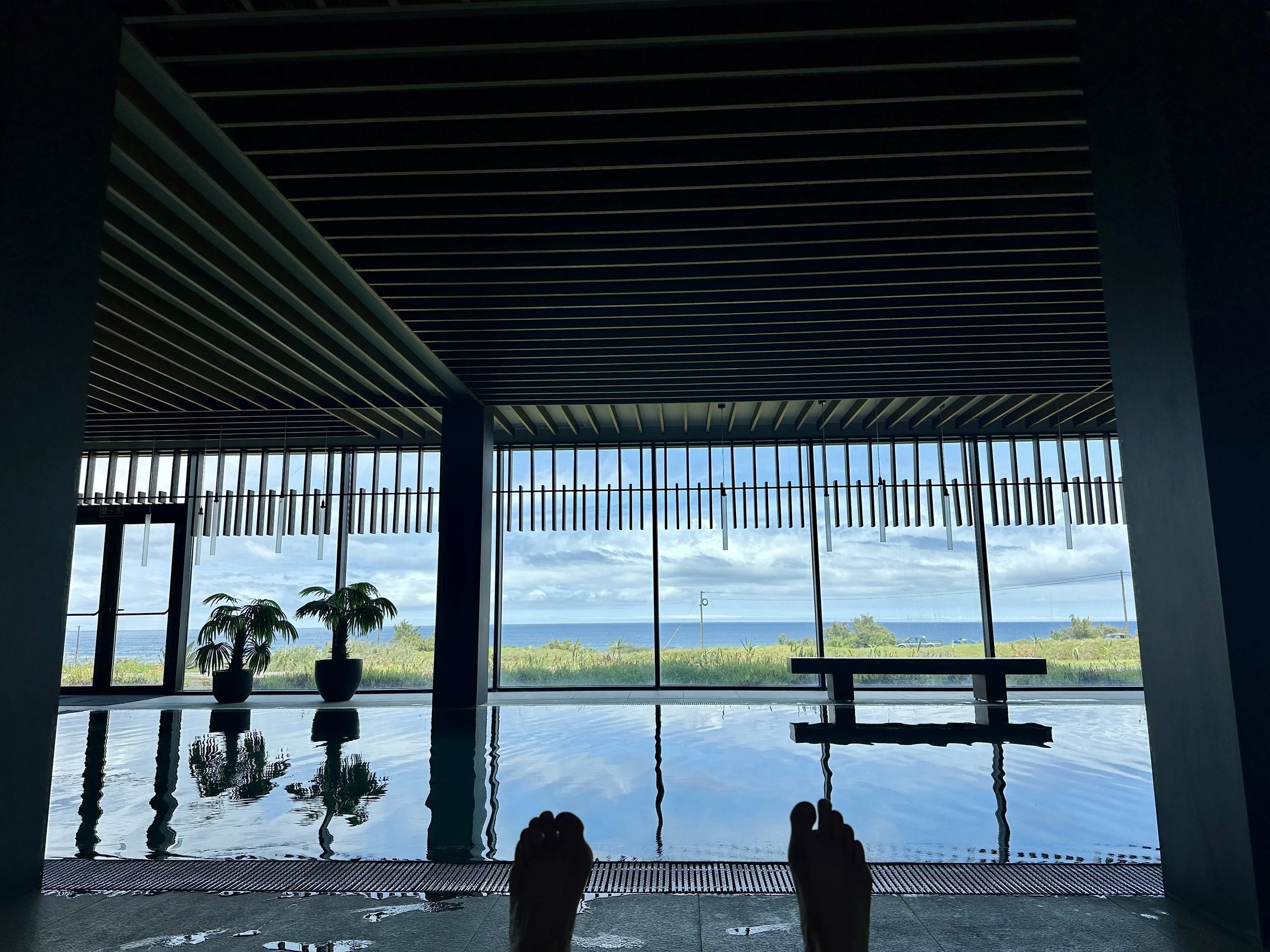
For our final night on the island, we checked into the Hotel Verde Mar & Spa, the most refined lodging of our trip and a fitting place to unwind before returning home. The modern architecture mirrors the surrounding cliffs, with floor-to-ceiling windows that open onto sweeping views of the Atlantic. Inside, soft lighting, local stone, and warm wood create a minimalist calm.
Instead of enjoying the hotel’s refined charms, however, we walked three quarters of a mile to the black sand and vertical cliff walls of Santa Barbara Beach (Praia do Areal de Santa Barbara). We registered at the Azores Surf Center and spent a couple of hours learning how to sort-of surf. What that meant was crashing in the frothy waves most of the time, and occasionally standing to ride ashore.
We later had a few cocktails overlooking the ocean and walked back to the hotel, where we sat on the patio and enjoyed our final Azores sunset before turning in early.
Ribeira Grande may not be São Miguel’s most famous destination, but ending our journey there with such comfortable accommodations only an hour’s drive back to the airport in the morning—felt exactly right.
Mountain biking São Miguel
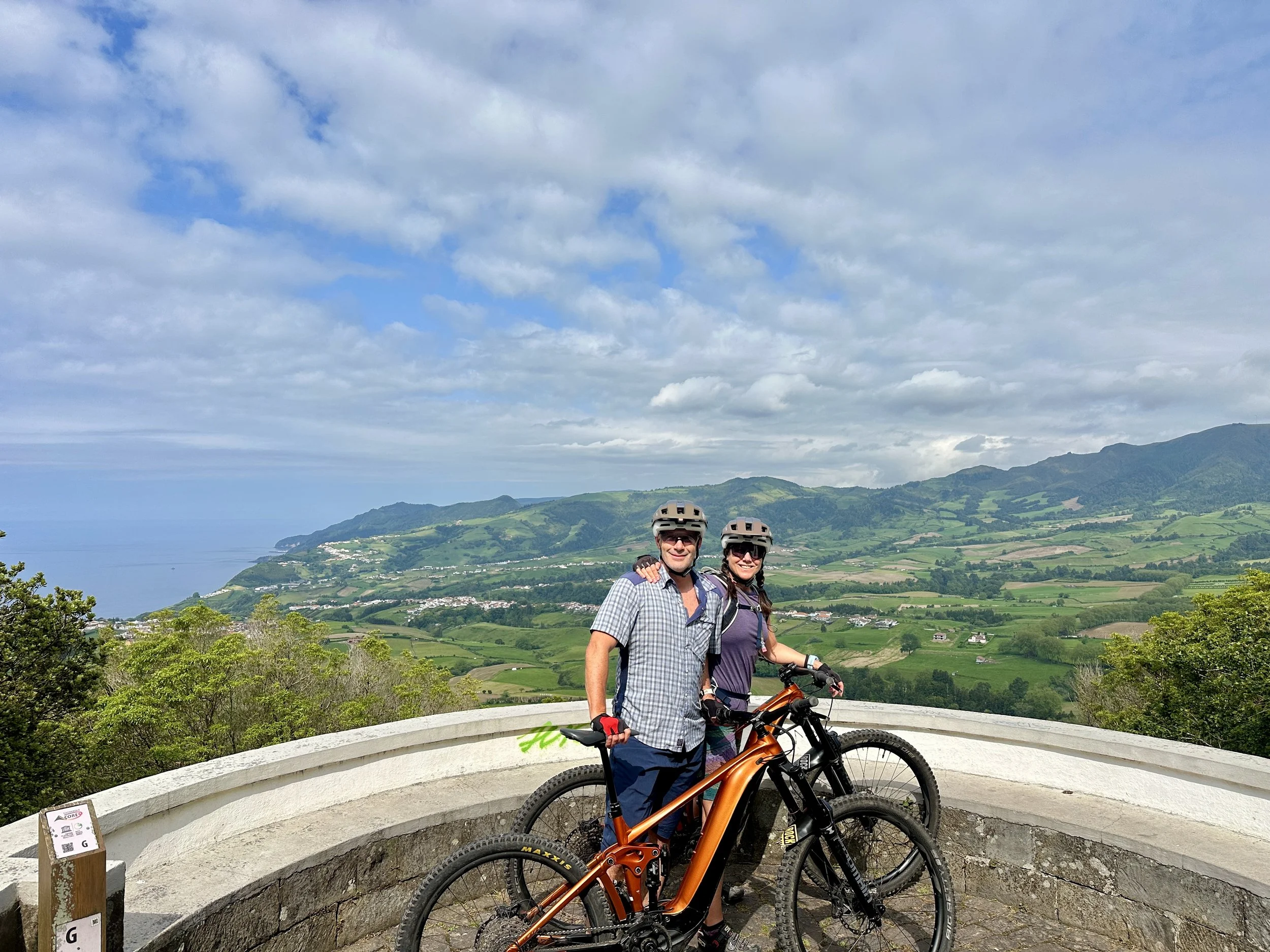
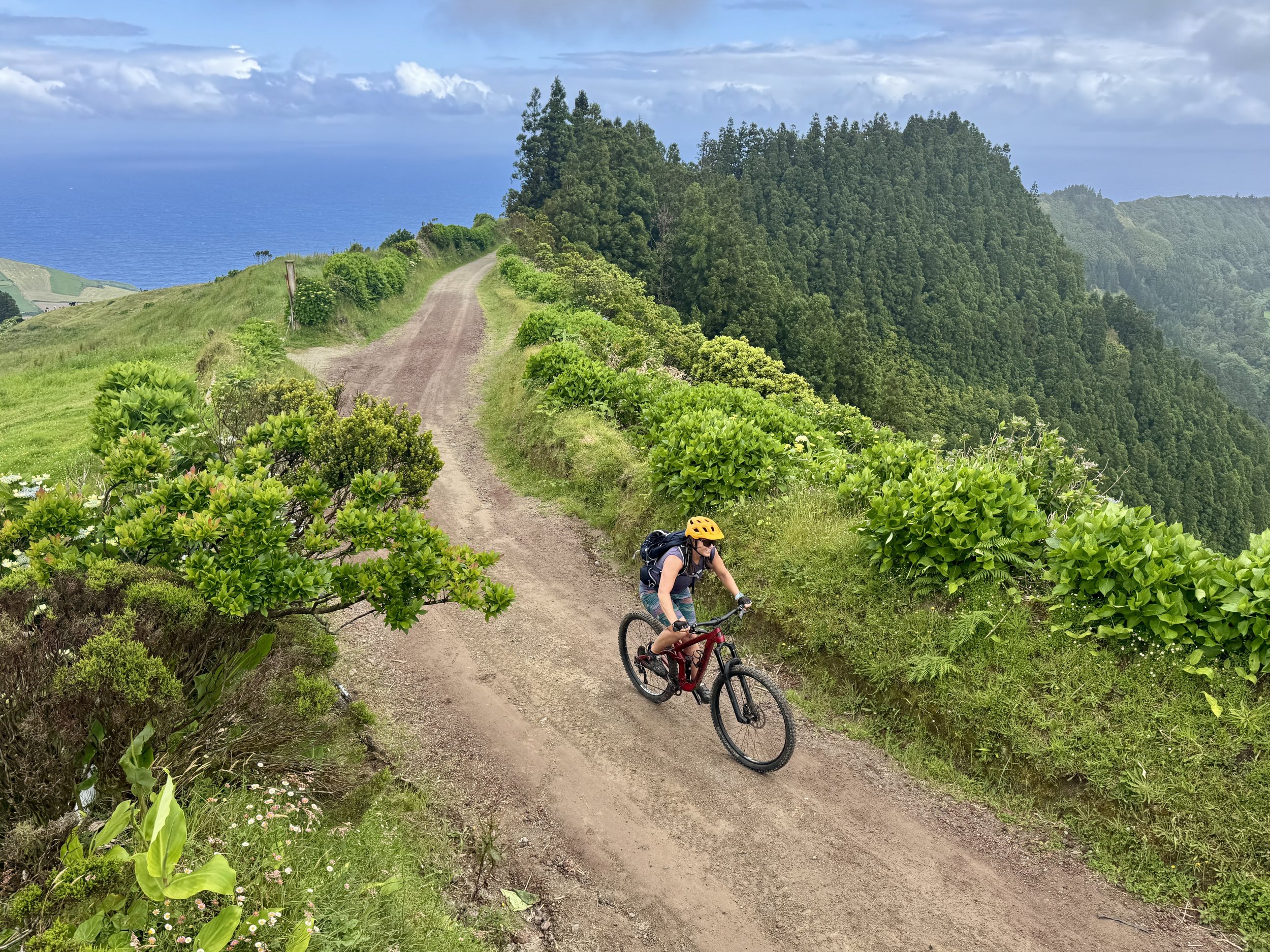
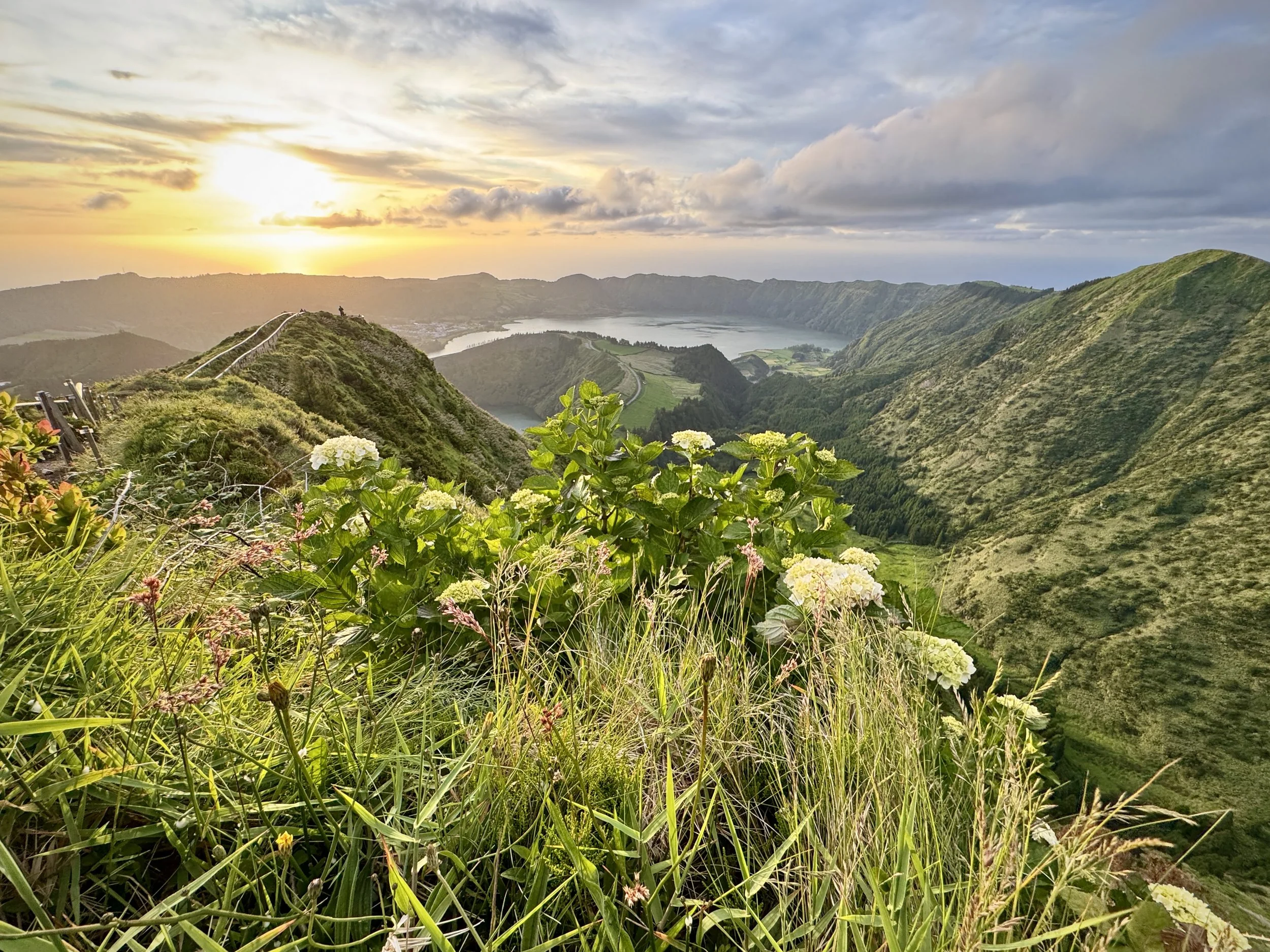
Mountain biking the crater rim at Sete Cidades.
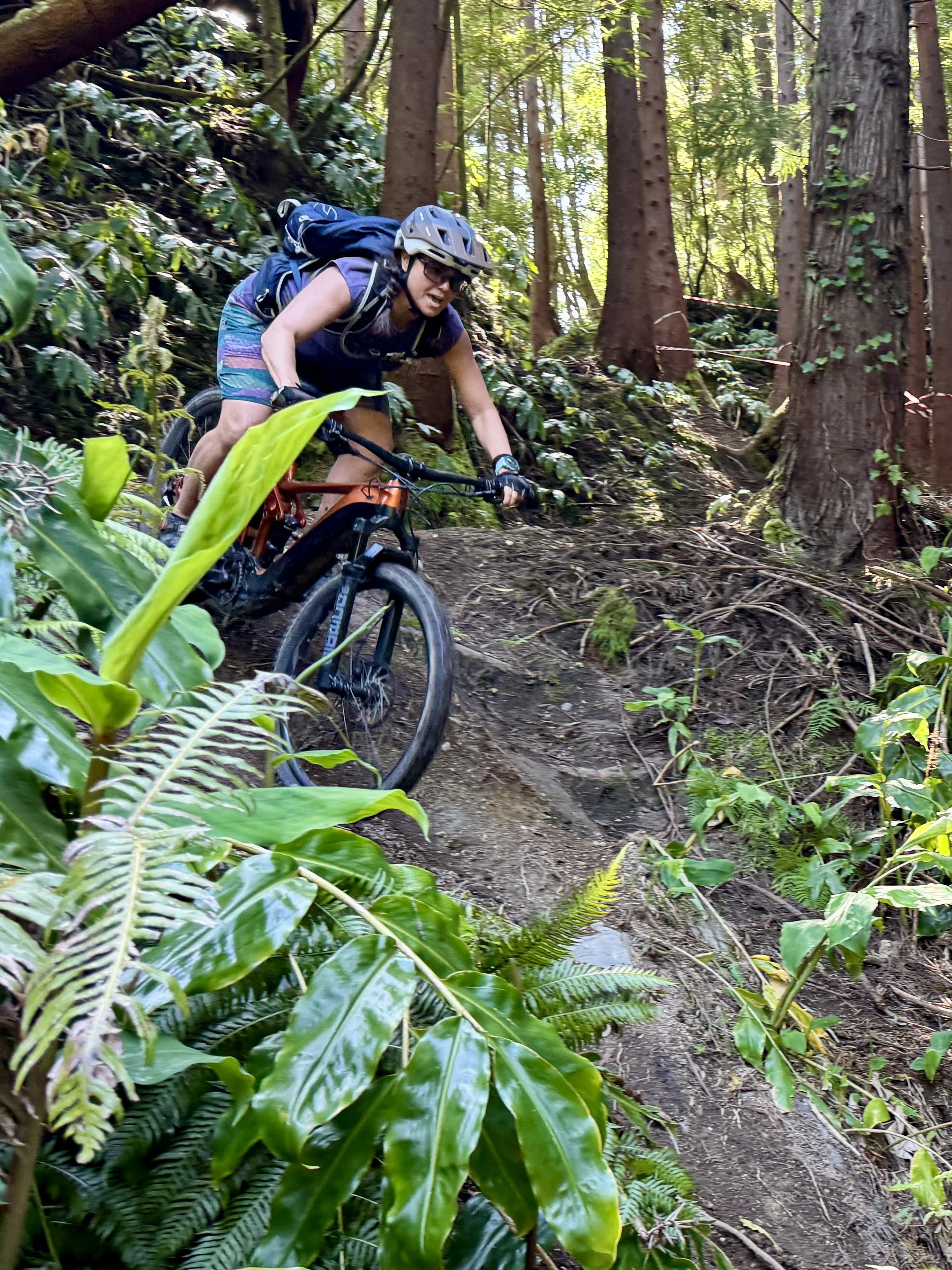
For mountain bikers, São Miguel offers a great mix of singletrack, dirt roads, and technical descents through deep forests down steep volcanic mountainsides. Bikes can be rented or guided tours arranged. We rode with two great guides: Emanuel with Azores Mountain Bike Holidays and Bernardo with Up Down Trails.
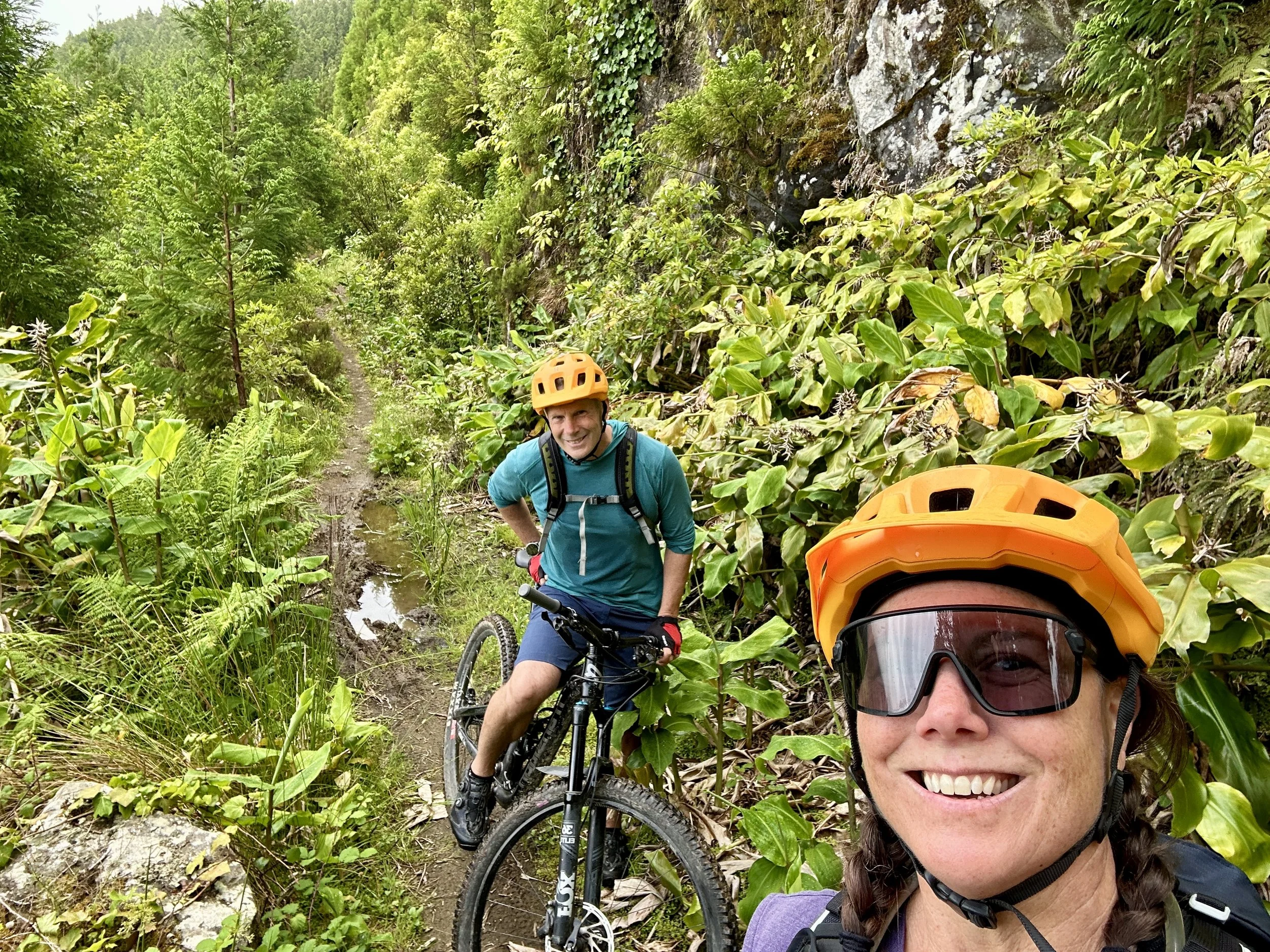
Mountain Biking Povoação and Furnas: Our first rides were near Povoação, a picturesque coastal town. Bernardo picked up us at our accommodation in Furnas and drove us to the coastal city of Povoação. We rode ebikes (first time) on two routes that combined road climbs and some advanced downhill riding through eucalyptus groves and fields of hydrangea.
We knocked out four rides over about 4,000 vertical feet by midday and headed for Furnas to finish the day. We enjoyed five or six laps of fast technical descending on a short and well-built track that swept down from the crater rim through eucalyptus groves.
Mountain Biking Sete Cidades: The trails above Sete Cidades are the island’s crown jewel for mountain bikers seeking scenery. Loops circle the crater rim, offering panoramic views of the twin lakes nearly a thousand feet below.
Emanuel picked us up under a misty sky at the bridge dividing the two lakes. He provided us well-tuned traditional full suspension mountain bikes. We climbed quickly to the crater rim where the clouds broke, and we enjoyed views of both the Atlantic and the crater at the same time—a surreal juxtaposition of sea and still water on a knife-edge cut of volcanic stone.
The riding required some stamina and nerve; some sections worked close to steep drop-offs. But the volcanic soil provided natural traction, and the constant play of light—fog streaming through tree ferns one moment, blazing sun the next, misty rain the next—was cinematic.
Scuba diving out of Ponta Delgada
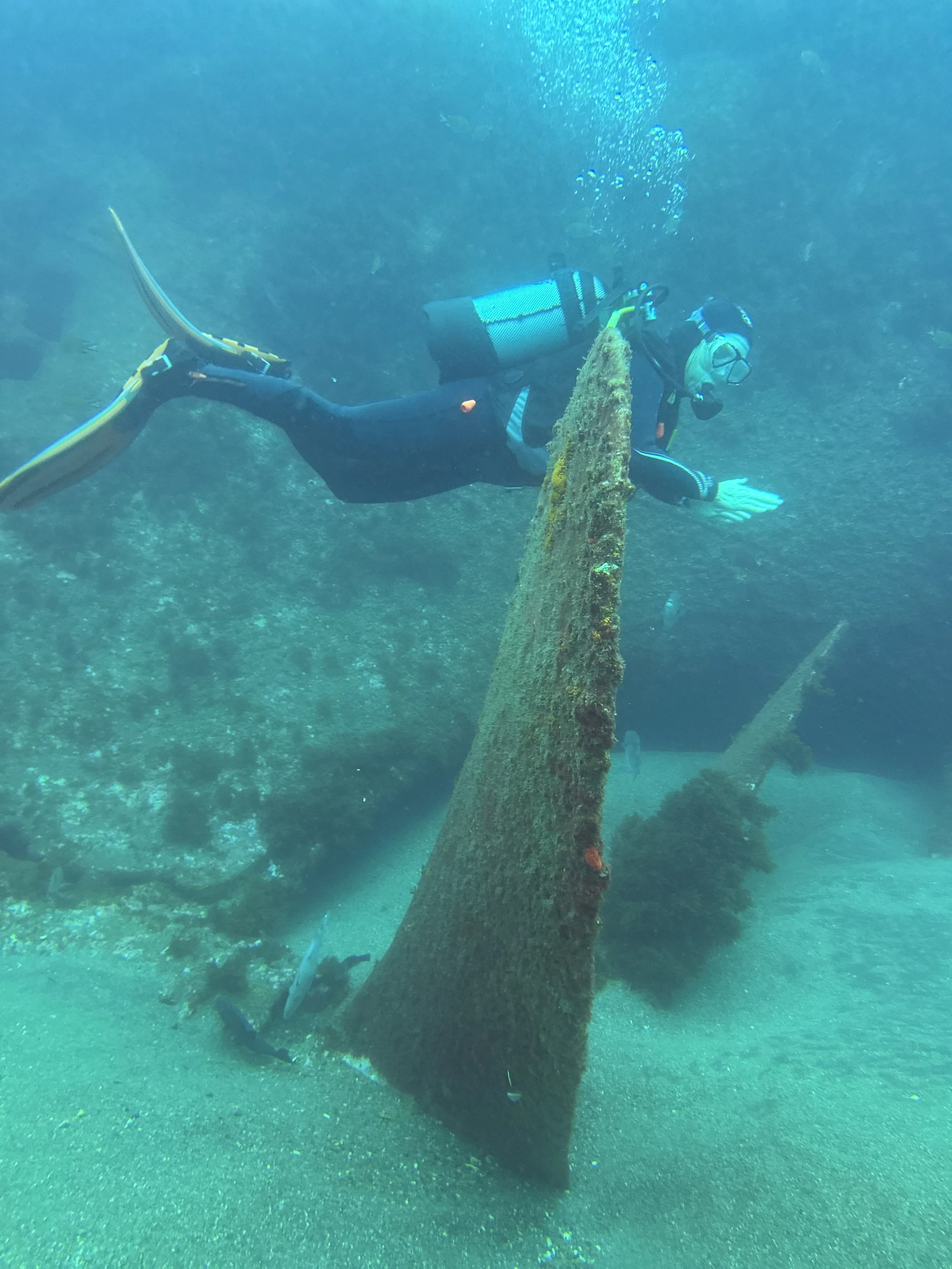
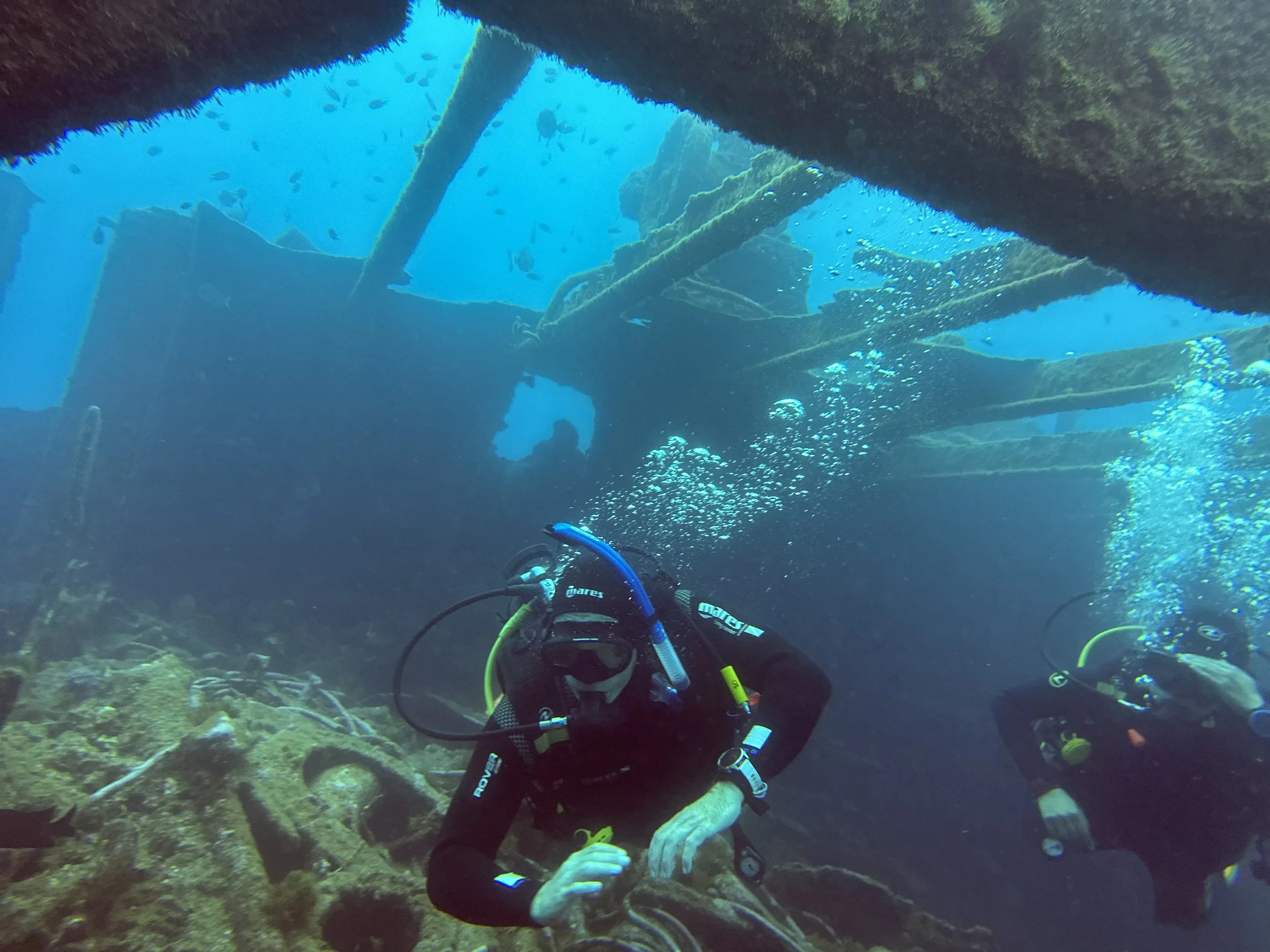
Diving the Dori Wreck out of Ponta Delgada.
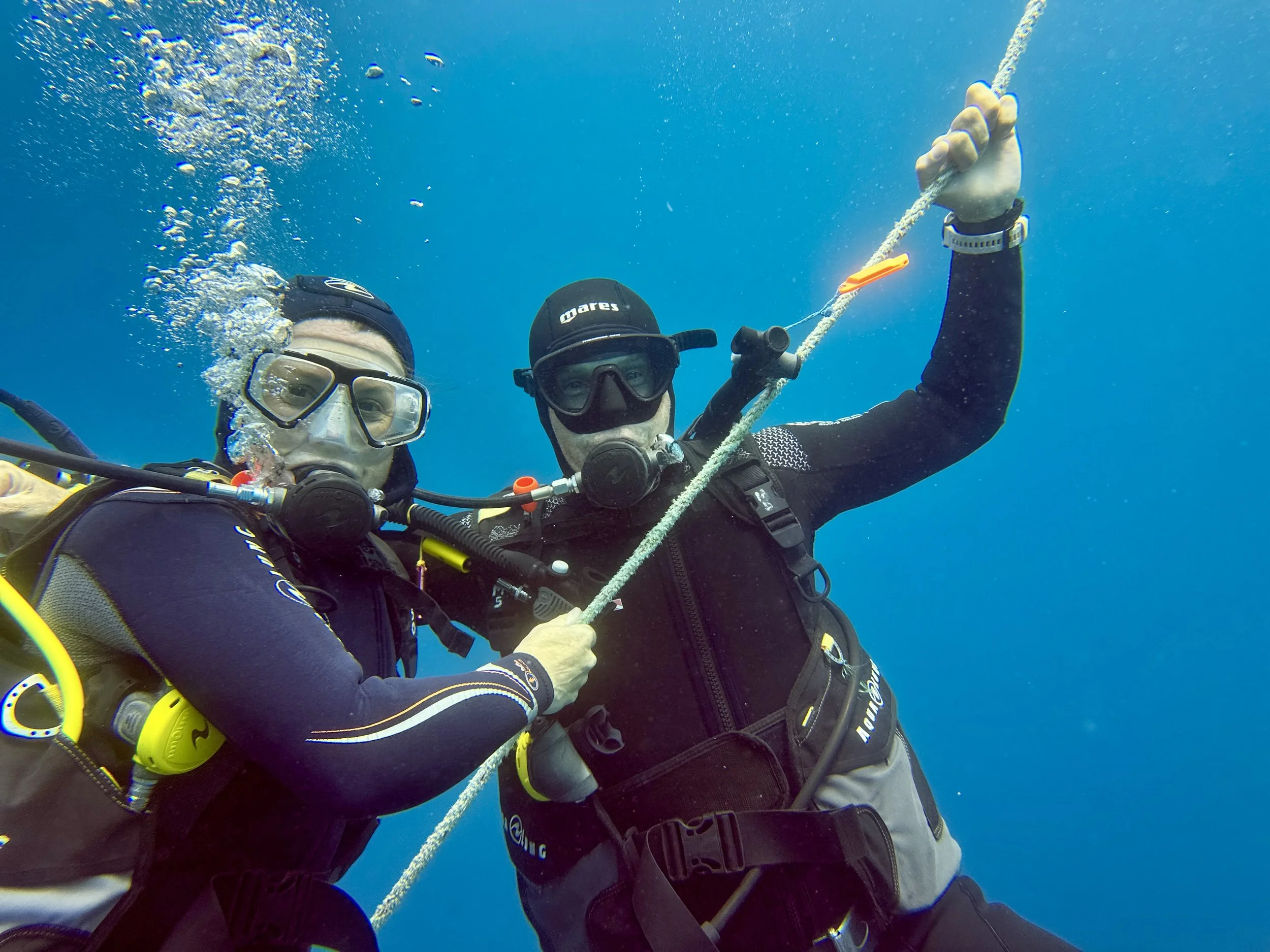
São Miguel’s volcanic origins make for world-class diving. The underwater landscape includes arches, lava tunnels, and sea caves sculpted by eruptions. Visibility often exceeds 100 feet, and the Gulf Stream brings both temperate and tropical marine species.
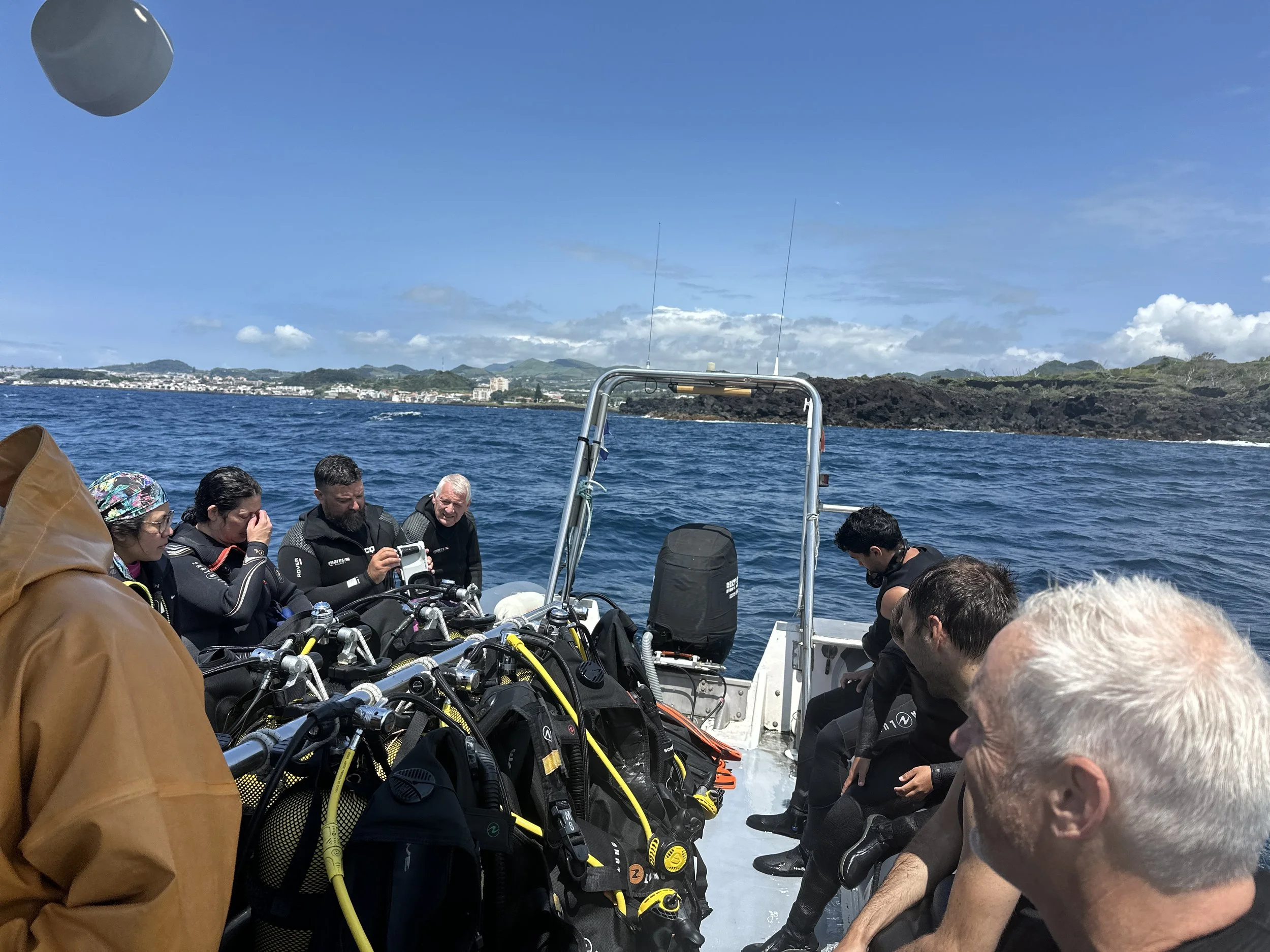
The islands are known for large pelagic ocean species like whales and devil rays, but we were both early in the season and a little too inexperienced for open ocean diving. We dove with Best Spot Azores Dive Center out of Ponta Delgada. It was a well-run dive operation with high safety standards and knowledgeable guides.
Our four dives ranged from shallow reef explorations to a wall dive, and also included one of the most dived locations on the island: a World War II wreck called the Dori.
The water was cool—around 68 degrees Farenheit—but crystal clear. Despite warm air temperatures and 7 mm wetsuits, we finished our two dives each day feeling a little cold.
Our late June trip was right on the cusp of the diving season’s start, our guides told us. A few weeks earlier, the ocean was rough and visibility low. A few weeks later, the surf may have been less choppy and water temperatures higher.
Travel safety and practical tips
The seaside town of Mosteiros, includes a few great beaches and charming architecture.
Getting to the Azores: Most travelers arrive via Ponta Delgada Airport (PDL). Flights from Lisbon take about two hours; from Boston or New York, roughly five. U.S. and Canadian citizens can enter Portugal visa-free for 90 days. Small planes can be chartered to fly from Ponta Delgada to the other Azorean islands.
Getting around: Renting a car is highly recommended. Roads are narrow but well maintained, and driving allows access to remote trailheads and hot springs. Expect roundabouts, steep grades, and an occasional cow traffic jam.
Health and safety: Tap water is potable, food standards are high, and medical facilities are modern. The biggest safety considerations are natural: slippery trails, steep cliffs, and sudden fog. Bring layers and waterproof gear even in summer.
Crime is rare, but exercise normal precautions. Lock valuables in your car, and avoid leaving belongings unattended at beaches.
Weather and when to visit: The Azores enjoy mild temperatures year-round, rarely dipping below 55 degrees farenheight or exceeding 75 degrees Fahrenheit. May through October offers the most stable weather, ideal for diving and biking. Winter brings moody skies and lush growth—beautiful in its own right if you don’t mind rain.
Why São Miguel belongs on your bucket list
With its combination of volcanoes, ocean, and culture, São Miguel feels like several destinations in one. You can hike a rainforest trail before breakfast, enjoy a European styled lunch, and watch the sun set from a thermal pool by dinner.
Yet the island’s greatest gift may be its pace. Life seems to move unhurriedly. Locals pause to chat at cafés, and travelers quickly fall into rhythm.
Whether you come for adventure or to charge your batteries, the Azores are a reminder that wildness and comfort often coexist—that geothermal heat, ocean salt, and human warmth can all flow from the same source.
From biking the rim of Sete Cidades to surfing the north shore, from lingering over meals in family-run cafés to drifting weightless above a volcanic reef, São Miguel distilled everything we love about travel into one unforgettable island.
Beyond the landscapes and adventures, however, it was the people—their quiet generosity, humor, and pride in their home—that made the experience truly special. Getting to know the rhythms of Azorean life felt like discovering the island’s greatest treasure of all.